

The best online ordering system for your restaurant depends on the type of business you operate, what you want to accomplish, and the technology you already use. An independent restaurant trying to grow more direct orders is going to have different needs than a rapidly expanding restaurant managing orders from several third-party marketplaces.
If you’re a restaurant operator comparing your options, this guide will help you identify which platforms are best suited to your goals. We’ll look at nine of the industry’s leading online ordering systems, including options designed to increase direct orders, reach new guests, manage multiple ordering channels, support enterprise operations, and automate marketing.
The right choice can help you retain more revenue, simplify your operations, and provide a smoother ordering experience for your guests.
In this article, you’ll learn:
- How different types of ordering platforms work
- The key advantages of each system
- Which platform is best suited for your restaurant
Let’s start with the best overall option for independent restaurants.
Best overall online ordering system for independent restaurants
SpotOn Order
SpotOn Order is the best overall online ordering system for independent restaurants that want to generate more revenue from online orders without having to sacrifice a percentage of every sale. SpotOn provides commission-free online ordering through your restaurant’s own website, helping you protect your margins by avoiding marketplace commissions that can run from 15% to 30%. Because guests order directly from you, it means that you own and control your customer data while keeping your brand front and center throughout the ordering experience. That familiar, branded experience can build trust, strengthen customer loyalty, and encourage repeat business.
WATCH: Commission-free Online Ordering for Restaurants | SpotOn Order
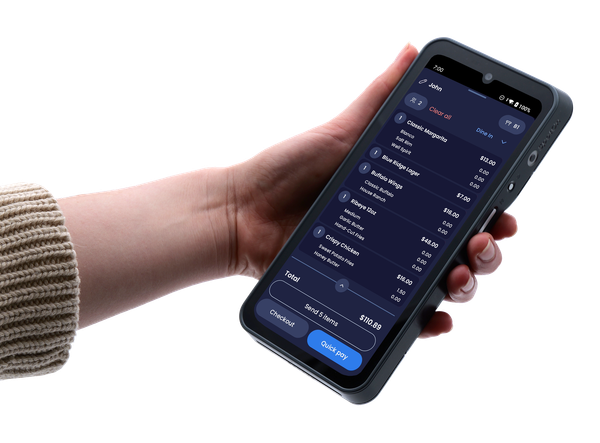
Orders flow directly into your SpotOn POS system and are then routed to the appropriate kitchen display system (KDS) or printer. This eliminates manual order entry, reduces errors, and keeps your in-the-dining-room and online sales together in one system. SpotOn Order also connects with your Google Business Profile, making it easy for guests to place pickup or delivery orders the moment they find your restaurant through Google Search or Maps. To help increase sales, SpotOn Order also leverages AI-powered menu recommendations to guests and proactive AI-powered insights with SpotOn Profit AI.
Restaurants using SpotOn Order are automatically listed in the GoTo Place mobile app, giving guests another way to find your restaurant, view the menu, order, and re-order pickup or delivery. Unlike third-party marketplaces, the GoTo Place app keeps the ordering experience focused exclusively on the restaurant the guest has selected instead of promoting competing options alongside it. The downside is that the app is not going to give you the discovery reach of big-name third-party marketplace apps.
SpotOn Order is best suited for: Independent restaurants that want to increase direct orders, avoid marketplace commissions, own their customer data, and connect online ordering with their existing restaurant operations.
Pricing: SpotOn Order charges a flat monthly software fee of $55, plus a one-time $200 setup fee. Processing costs 3.45% + $0.15 per transaction. There are no per-order commissions, and the GoTo Place app is included.
WATCH: SpotOn Order Gives Butcher Paper BBQ a New, Commission-free Revenue Stream
Best for attracting new guests
Third-party marketplaces are great at putting your restaurant in front of hungry customers who are actively looking for something to eat. In exchange for that exposure, restaurants pay marketplace commissions that help cover customer acquisition, marketing, payment processing, and delivery infrastructure. Because those costs can quickly add up as order volume grows, these platforms are best used to attract new guests. Restaurants can then encourage repeat customers to order through a first-party online ordering system.
DoorDash
DoorDash is the largest third-party delivery app in the US, taking up 67% of market share. Listing your restaurant on its app gives you access to customers browsing by cuisine, location, delivery time, and other preferences, while DoorDash’s network of Dashers handles delivery.
Restaurants can choose from three plans that trade higher commission rates for greater reach and built-in marketing tools. Plus and Premier provide access to DashPass customers and larger delivery areas, while Premier adds automatic sponsored listings and other promotional support. DoorDash also offers promotions, performance reporting, and integrations that send orders directly to compatible POS systems, including SpotOn.
Best suited for: Restaurants willing to pay commissions to reach new customers and outsource delivery.
Pricing: No signup or monthly fees. Delivery commissions are 15% for Basic, 25% for Plus, and 30% for Premier. Pickup orders carry a 6% commission across all three plans.
Uber Eats
Uber Eats gives restaurants several ways to use its marketplace and delivery network. Its marketplace helps restaurants reach new customers through the Uber Eats app, with three fulfillment options, including:
- Pickup
- Delivery through Uber’s couriers
- Delivery using the restaurant’s own staff
Restaurants can also use promotions, ads, menu-management tools, performance reporting, and POS integrations, including SpotOn, to manage and grow marketplace orders.
Beyond marketplace discovery, Uber Direct lets restaurants use Uber couriers to fulfill orders placed through their own website, app, or phone. Webshop, Uber’s online ordering product, gives restaurants a branded, commission-free way to serve existing customers while still using Uber’s delivery network.
Best suited for: Restaurants that want marketplace exposure and flexible access to Uber’s delivery network across first-party and third-party orders.
Pricing: Uber Eats’ standard U.S. marketplace fees are 20% for Lite, 25% for Plus, and 30% for Premium. Pickup fees are 7% with validated in-store pricing, although rates can vary by market. Uber Direct starts at $7.99 per delivery.
Grubhub
Grubhub gives restaurants access to customers searching for delivery and pickup across both the Grubhub and Seamless marketplaces, which includes 33+ million diners. Its partnership with Amazon expands that reach by giving Prime members complimentary access to Grubhub+ and allowing customers to order through Amazon’s website and app.
Every plan also includes account support, a free professional menu photoshoot, and tools for managing listings, menus, orders, promotions, and performance. Restaurants can increase their visibility with sponsored listings and earn monthly advertising credits based on their plan’s commission rate. POS integrations send marketplace orders directly to the restaurant’s existing system, so staff members don’t have to enter them by hand.
Best suited for: Restaurants that want marketplace exposure with built-in marketing tools and account support.
Pricing: Grubhub charges a marketing commission of 5% for Basic, 15% for Plus, or 20% for All-access. There are no platform or maintenance fees. Restaurants using Grubhub’s drivers pay an additional delivery fee starting at 10%.
Best for funneling different marketplaces into your POS
Restaurants using multiple third-party platforms can quickly end up juggling tablets, manually entering orders, and updating menus across several platforms. Order aggregators connect those marketplaces directly to the POS, allowing orders to flow automatically while menus, prices, and availability are managed from one place.
Deliverect
Deliverect funnels marketplace orders from multiple third-party delivery apps into your restaurant’s POS, including SpotOn POS. From there, operators can update online menus, prices, and item availability across every online ordering channel from one central dashboard.
Consolidating orders and updates reduces manual order entry and eliminates the need for staff to manage the same information across several separate systems. Deliverect also uses AI to analyze order data, optimize menus and upsells, identify storefront issues, and dispute incorrect refunds. These tools can help restaurants protect revenue and maintain control as order volume grows.
Best suited for: Multi-location restaurants and growing brands that want to automate marketplace management, improve performance, and recover lost revenue.
Pricing: Deliverect uses custom pricing based on the restaurant’s location, number of locations, scale of digital operations, and selected products.
Chowly
Chowly connects orders from more than 150 third-party delivery apps with over 50 restaurant POS systems, including SpotOn. Operators can manage menus and orders from one dashboard instead of updating and monitoring each channel separately.
Chowly also offers tools designed to help independent restaurants turn marketplace customers into direct customers. The platform includes commission-free online ordering, branded websites and mobile apps, loyalty programs, email marketing, and tools for managing customer data. Chowly also uses AI to adjust marketplace pricing, recommend upsells, manage Google ads, and automate third-party order disputes.
Best suited for: Restaurant operators that want to consolidate marketplace orders in their POS while using AI-powered dynamic pricing and automated dispute management to protect their margins.
Pricing: Chowly does not publish pricing on its website. Contact the company for a custom quote.
Checkmate
Checkmate helps enterprise restaurant brands connect third-party ordering platforms with their existing technology so marketplace orders flow directly into the POS, including SpotOn. Operators can centrally manage menus, pricing, item availability, and promotions across channels and locations.
The platform also provides real-time order tracking, driver updates, analytics, automated alerts, and refund dispute management. Larger restaurant groups can set controls at the brand, franchise, or location level. This helps them keep operations consistent while giving users access to the locations they manage.
Best suited for: Enterprise restaurant brands that need centralized control over third-party ordering across multiple locations.
Pricing: Checkmate does not publish rates online. Restaurants can request custom pricing based on their locations and technology needs.
Best for enterprise restaurant brands
Enterprise restaurant brands need an online ordering platform that can maintain consistent operations and guest experiences across many locations and ordering channels.
Olo
Olo gives enterprise restaurant brands a scalable platform for managing digital operations across multiple locations. It brings online ordering, payments, delivery, catering, loyalty, and marketing together in one place.
Restaurant brands can use Olo to manage ordering across websites, apps, kiosks, and delivery services while keeping operations consistent from one location to the next. The platform also centralizes guest data, allowing brands to personalize recommendations and marketing based on a customer’s preferences and order history.
Best suited for: Enterprise restaurant brands that need one scalable platform to manage digital ordering, payments, delivery, and guest engagement across many locations.
Pricing: Olo does not publish rates online. Restaurants can request custom pricing based on the products and services they need.
Best for AI-powered marketing
60% of a restaurant’s sales come from repeat business. AI-powered marketing tools can make that easier by turning guest information into timely, personalized campaigns.
Popmenu
Popmenu uses AI to create restaurant-specific email, text, and social media campaigns. Operators can review and edit the content or let the platform create and send campaigns automatically. Audience targeting helps restaurants send more relevant messages and offers to different groups of guests based on their order history, preferences, and how recently they visited or placed an order.
Popmenu combines these capabilities with restaurant websites, interactive menus, online ordering, loyalty, reputation management, and AI phone answering. Real-time reporting connects marketing activity with guest behavior, helping operators understand which campaigns are driving results.
Best suited for: Restaurants that want to use AI to automate marketing, personalize guest communication, and encourage more repeat visits.
Pricing: Popmenu plans start at $159 per month when prepaid annually, but AI marketing features are only included with higher-tier plans starting at $269 per month.
WATCH: How to Create Online Ordering for Your Restaurant (and Increase Profit)
Frequently asked questions
Here are the most common questions asked when restaurant operators are learning about online ordering systems for restaurants.
What is the best online ordering system for restaurants?
There is no single best online ordering system for every restaurant. The right choice depends on your restaurant’s size, goals, budget, and current technology. Direct online ordering systems, such as SpotOn Order, are best for avoiding high commission fees and owning customer data, while third-party marketplaces are best for reaching new customers and growing your customer base. Restaurant operators should compare these options based on what they need the system to accomplish and what they can afford.
What is the difference between first-party and third-party online ordering?
First-party online ordering allows guests to order directly through a restaurant’s website or app. The restaurant keeps control of its brand, experience, and customer data while avoiding marketplace commissions. Third-party ordering takes place through marketplaces such as DoorDash, Uber Eats, or Grubhub, which provide greater customer reach but charge high commission or service fees.
Can online ordering systems integrate with a restaurant POS?
Yes. Many restaurant online ordering systems can send digital orders directly to compatible POS systems and route them to the appropriate kitchen printer or display. This reduces manual entry, prevents employees from having to manage several tablets, and keeps in-person and online sales in the same system. Compatibility depends on the ordering provider and the restaurant’s specific POS.
Do restaurants pay commissions on online orders?
It depends on the platform. Third-party marketplaces generally charge commission fees in exchange for customer exposure, marketing, and delivery services. Direct ordering platforms may instead charge monthly fees, transaction fees, or a per-order fee. Restaurants should compare every charge to understand the real cost of each option.
Can a restaurant use multiple online ordering platforms?
Yes. A restaurant can use multiple online ordering platforms to reach more customers and support both direct and third-party orders. In many cases, those platforms have direct integrations with restaurant POS systems. Alternatively, an order aggregator can connect these platforms to the restaurant’s POS, reducing manual entry and tablet clutter. Operators should keep menus, prices, hours, and item availability consistent across every channel.