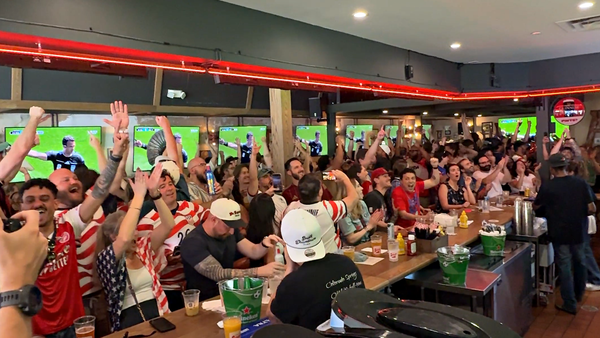

The World Cup 2026 will bring more than soccer fans to restaurants. It will bring groups, longer stays, packed bar areas, early matches, tourist traffic, and guests looking for a place to watch together.
For restaurant owners and operators, that creates a real opportunity. It also creates pressure.
Restaurants that want to benefit from World Cup traffic will need more than TVs and team flags. They’ll need menus built for volume, staff trained for large groups, clear gratuity policies, smart inventory planning, and a point-of-sale setup that helps teams move quickly when the room fills up.
SpotOn, a leading restaurant technology and financial services company, analyzed World Cup themed menu additions across its restaurant POS platform. The data shows operators are already building match-day demand into their menus, merchandise, beverages, and service plans.
The clearest signal: May accounted for 54% of all World Cup themed menu additions in the latest three-month period, with beverage items representing 65% of the dataset.
Key SpotOn stats
SpotOn analyzed 204 World-Cup themed menu additions across the latest three-month period.
Key findings:
- May accounted for 54% of all World Cup themed menu additions in the analyzed period.
- May additions were 150% higher than April and 120% higher than March, showing restaurant prep is accelerating as the tournament gets closer.
- Beverage items led the dataset, representing 65% of all additions.
- Retail and merchandise represented 27% of additions, including soccer shirts, soccer balls, party supplies, and fan items.
- Food and snack items represented 5% of additions, including match-day combos, soccer sweets, and futbol-themed snacks.
- Events and activity-based items also appeared in the data, including soccer tournament-related offerings.
- Among positive-priced items, the median listed price was $18.50.
- Nearly two-thirds of positive-priced items were $25 or less, suggesting operators are building accessible game-day offers that can drive traffic without requiring a premium ticketed event.
- More than 80% of positive-priced items were $50 or less, while a smaller premium tier included higher-priced beverage bottles, merchandise, and group-friendly items.
- Among items with state data available, World Cup themed menu additions appeared across 25 states.
- Ohio, Texas, and Missouri represented 57% of state-tagged additions, showing early activity in both major markets and secondary restaurant markets.
- In May, 39.09% of active processing SpotOn restaurant clients had at least one order with auto-gratuity applied, up from 37.99% in April.
The auto-gratuity analysis measured restaurants that had at least one order in the month with auto-gratuity applied. It does not mean auto-gratuity was applied to every order or that every restaurant had auto-gratuity enabled as a default setting.
Beverage is leading the match-day playbook
The strongest signal in SpotOn’s data is beverage.
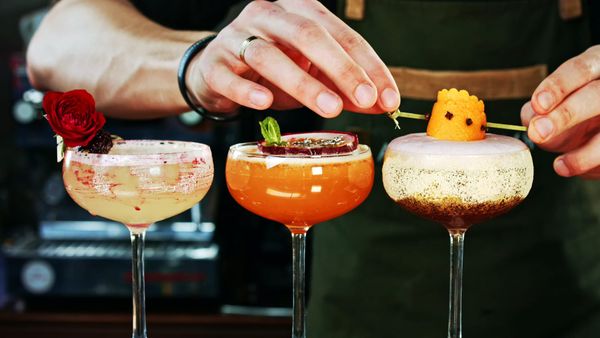
Beverage items represented 65% of World Cup themed menu additions. That includes beer, liquor, tequila, cocktails, draft beer, canned beer, and other drink items built for match-day service.
That tracks with how fans watch soccer. Matches bring groups together. Guests arrive early, stay longer, and keep ordering through the final whistle. For restaurants, that can be a strong revenue opportunity if the beverage menu is easy to order, easy to ring in, and easy for staff to explain.
The data shows operators testing a range of soccer and futbol-themed beverage ideas, including soccer boot beers, Futbol Beer, Futbol Pasion, matchday draft items, and country-referenced soccer ball tequila items tied to USA and Mexico.
The opportunity is real. So is the pressure. A busy World Cup shift can slow down fast if drinks are hard to ring in, poorly named in the POS, or not planned against inventory.
Merch and fan items are part of the restaurant experience
Retail and merchandise represented 27% of World Cup themed menu additions.
That matters because the restaurant opportunity is not limited to food and drinks. Operators are also adding items that help turn a match into an experience: apparel and accessories, soccer balls, party supplies, and other fan-friendly items.
For consumers, that means the tournament may feel more local. Fans may not need to be in a stadium or a host city to feel part of the energy. They may find it at a neighborhood bar, brewery, cafe, restaurant patio, or soccer pub that built the day around the match.
For operators, merch and small add-ons can create extra revenue without adding pressure to the kitchen.
The menu strategy is simple: make it easy to order and easy to share
Food and snack items were a smaller share of the dataset, but the examples point to a practical playbook.
Restaurants are adding items like Match Up Combo, Churros Futbolitos, soccer lollipops, and other soccer-themed snacks or group-friendly offers. These are the kinds of items that make sense for guests watching a match together: easy to understand, easy to order, and easy to share.
The strongest World Cup menu does not need to be complicated. It needs to work when every seat is full.
For operators, that means:
- Keep the menu tight.
- Build specials into the POS early.
- Make names clear for staff.
- Use group-friendly items where possible.
- Plan beverage inventory before the rush.
- Create offers that feel fun without slowing service.
For a closer look at how one soccer-focused operator is preparing, SpotOn recently profiled Brewhouse Cafe, the Atlanta restaurant voted America’s best soccer bar, and its plan to deliver stadium-like energy without stadium-like lines.
The World Cup opportunity extends beyond host cities
While restaurants in official host cities like Houston and Los Angeles are in the spotlight, there will be restaurant demand from coast to coast. As national restaurant chains roll out World Cup marketing campaigns, SpotOn believes independent restaurants have a unique advantage: they can create local match-day experiences that feel rooted in the community, support their local economy, and give fans a place to gather close to home.
SpotOn’s data shows World Cup themed menu additions across the U.S. with Ohio, Texas, and Missouri representing the largest share of additions. That supports a bigger restaurant industry signal: secondary markets matter.
Fans travel between matches. Local soccer communities gather close to home. Families look for places to watch together. Fans who do not have, or were priced out of tickets still want the energy of the tournament.
Restaurants outside host cities should not write off the opportunity. For many operators, the best play may be becoming the local place fans choose to watch.
Auto-gratuity will be part of the service conversation
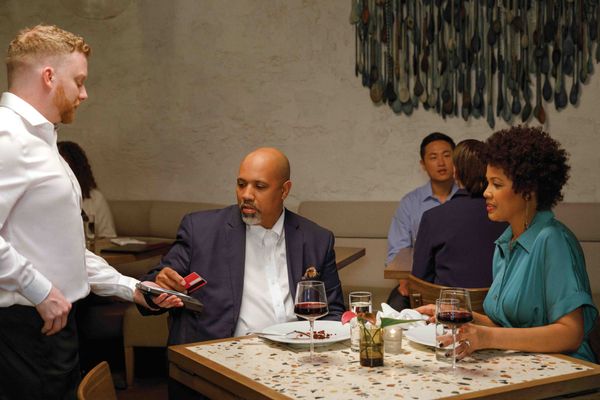
World Cup traffic will likely bring larger parties, longer table times, and more group reservations. That puts gratuity policies back on the operational checklist.
SpotOn processing data shows that in May, 39.09% of active processing SpotOn restaurant clients had at least one order with auto-gratuity applied, up from 37.99% in April. This doesn’t mean auto-gratuity was applied to every order, but it does signal auto-gratuity is an active tool for many restaurants and could be a sign they’re planning to account for international diners not familiar with the U.S.’s tipping culture.
During the tournament, operators may review auto-gratuity or service charge policies for large parties, private events, group reservations, watch parties, tourist-heavy shifts, and longer match-day table times.
For consumers, the key is transparency. Guests should know what to expect before the check arrives.
For operators, the key is training. Staff should be ready to explain the policy clearly and consistently.
What this means for restaurants
World Cup 2026 will give independent restaurants a chance to compete for the same fan attention national chains are already chasing, but with a different strength: local hospitality.
The best match-day experiences will not come from a one-size-fits-all campaign. They’ll come from restaurants that know their neighborhoods, understand their guests, and can turn a busy match into a reason for people to gather, spend locally, and come back.
SpotOn’s data points to a practical World Cup restaurant playbook: build themed items into the POS early, keep menus easy to execute, lean into beverages and fan-friendly add-ons, review auto-gratuity policies, and make sure staff can move fast when the room fills up.
Bottom line
World Cup 2026 will bring restaurants new guests, larger groups, longer stays, and more pressure on the operation.
The restaurants best positioned to benefit will be the ones that prepare early: building match-day items into the POS, simplifying service, planning inventory, setting clear gratuity policies, and creating menus that help fans gather without slowing the team down.
The tournament will last a few weeks. The guest relationships restaurants build during it can last much longer.