

Restaurants hired aggressively heading into summer and then pulled back. According to new federal data released today, food services and drinking places shed nearly 33,000 jobs in June after a strong May, even as the World Cup and America's 250th anniversary brought some of the heaviest tourism traffic in years.
SpotOn's restaurant data tells a more nuanced story. Across SpotOn's restaurant clients, June 2026 shifts per location are up 5% compared to June 2025, while employees per location grew just 0.3%. The operators who avoided the June correction were the ones who scheduled more precisely, and didn't need to hire or reduce jobs.
Key findings
- Restaurants and bars shed nearly 33,000 jobs in June after a May hiring push, according to the U.S. Bureau of Labor Statistics, even as the World Cup and America's 250th anniversary drove some of the heaviest tourism traffic in years.
- Across SpotOn's point-of-sale data, June 2026 shifts per location are up 5% year-over-year, while employees per location grew just 0.3%.
- SpotOn's restaurant clients hit peak staffing in May and June, but the growth was in shifts scheduled, not new hires.
Why this summer is different from a typical hiring push
Most summers hand restaurant operators a roughly predictable demand curve: Memorial Day kicks things off, July 4th can bring another peak, August starts to slow, with Labor Day closing out the season. The schedule is familiar enough that hiring decisions made in May tend to hold through September, but this Summer is breaking that pattern.
The World Cup has brought a different level of demand to restaurants' usual season, much of it concentrated in specific host cities or tied to the match schedule, adding in international visitors who behave differently than the American crowd. But the World Cup is only the first example. America's 250th anniversary, summer concert runs, local festivals, and severe weather that can turn a fully booked night into a night of no-shows, making it hard for operators to predict demand and even harder to schedule accordingly.
That kind of volatility changes the math for staffing. When demand follows a pattern you've seen before, adding headcount ahead of the season is a reasonable bet. When the crowd depends on which team is playing or whether a storm rolls through, a permanent hire is a harder commitment to justify.
The question restaurant owners are asking right now is a familiar one with new urgency: how many people do you actually need on the floor when you can't fully predict demand?
Operators are split and both approaches are rational
Restaurant owners in World Cup host cities are taking meaningfully different approaches, and it makes sense given how unevenly traffic has been reported.
Some operators near stadiums, hosting official events, or located in high foot-traffic areas have hired ahead of demand. They've made the bet that the volume is coming and that being understaffed on a match night costs more than a few extra weeks of payroll. Others are holding steady, watching and waiting for sales data to confirm before committing to new headcount, especially in cities still working through a slower year for local dining.
What SpotOn's data shows is that the operators managing this moment most effectively are getting more precise about scheduling and finding efficiencies for the staff they have.
Restaurants scheduled 5% more shifts in June 2026 with nearly the same headcount
Across SpotOn's restaurant clients, May and June 2026 were the peak months for both shifts per location and employees per location, consistent with normal seasonal hiring going into summer. But compare June 2026 to June 2025 and a more specific pattern emerges.
Restaurants are scheduling more shifts without adding staff at close to the same rate. The math only works if operators are scheduling more strategically to meet demand, rather than overstaffing or leaving shifts open. It's a positive sign operators are taking a more disciplined approach to scheduling with the help of better data and labor management tools.
The trade-off isn't whether to hire but whether to hire permanently
The data plays out at the individual restaurant level across World Cup markets. Sam Zelver of Kin Khao Thai Eatery in San Francisco said business picked up in June, and he credits some of that lift to World Cup traffic in the city. For operators, weighing a genuine sales bump against the ongoing cost of adding staff, the question is whether they should staff up permanently for a temporary lift.
The operators building the most scheduling precision into that decision are typically working from sales data, not instinct. SpotOn's scheduling tools surface labor cost versus sales in real time, flagging when projected staffing is running ahead of actual demand before the shift starts. For operators using different labor management integrations, SpotOn integrates with tools like 7Shifts, which syncs with SpotOn POS data every five minutes, giving managers a running labor cost vs. sales picture in real time so they can make adjustments on the fly instead of waiting until the next day.
International guests are raising new questions about tipping and operators are adapting
The staffing question isn't the only World Cup adjustment operators are managing. International visitors have been vocal about how unfamiliar and expensive American tipping norms feel. At the same time, 51% of tipped restaurant workers believe that customers don’t fully understand how tips factor into their wages. Operators are adjusting how they communicate the system to guests, coaching staff to proactively explain that service is not included in the price the way it often is in Europe. For operators already thinking hard about staffing precision, this adds another layer of complexity. Front-of-house teams need to be equipped to navigate guests that may not understand, or agree with, how American hospitality is priced, without that friction dragging down service for the table next to them.
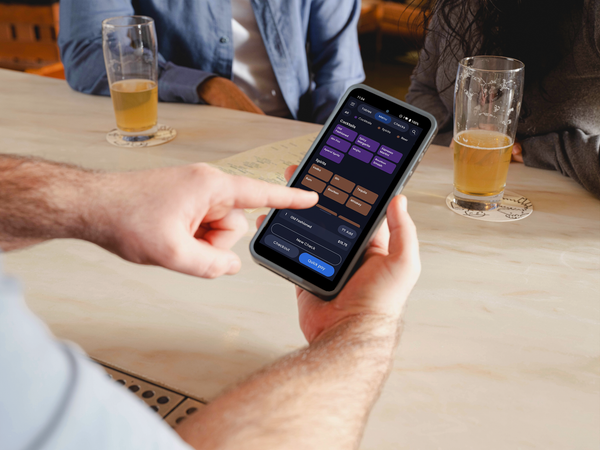
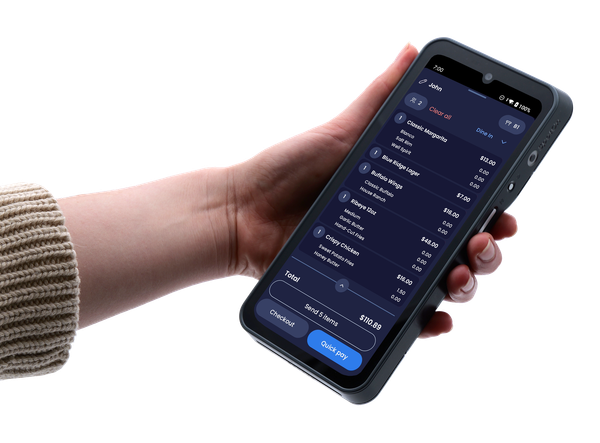
SpotOn's point-of-sale lets operators configure guest-facing transparent tip prompts reducing the need for explanation, while automated tip distribution ensures staff earnings stay consistent regardless of how individual guests respond to the prompt. For high-volume match nights, that consistency matters. Handheld POS devices also help servers order and process payments tableside. With a handheld, staff can close a check faster and handle the tip prompt in the flow of the interaction, rather than routing a confused international guest to a fixed terminal.
How to staff a summer you can't predict: five things operators are doing right now
The broader labor market is stable, but stability at the macro level doesn't tell you how to staff a Tuesday watch party in a city that might have 300 extra fans in a six-block radius, or might not. Here's what the operators handling this most effectively are doing.
1. Build a shift pool, not just a headcount.
Rather than committing to additional full-time or part-time hires, operators in uncertain markets are building flexible restaurant schedules, sometimes designating one or two existing employees per shift as on-call. This gives the restaurant scheduling flexibility without a long-term payroll commitment while offering part-time staff looking to pick up hours an attractive option.
2. Let last week's reporting tell you what this week needs.
While instinct about crowds can be unreliable, historical sales data from similar events offers more insight. Operators using historical hourly sales to build their schedules can match what their specific location experienced previously. The general manager of Adalina in Chicago used their SpotOn reporting and Teamwork to identify a slow early-morning daypart, cut an hour from the opening shift, and save approximately $1,000 per week in labor without a single complaint from guests.
3. Post schedules at least two weeks out.
Several World Cup host cities, including Los Angeles, Philadelphia, and New York, have Fair Workweek or predictive scheduling regulations that require advance notice and may require compensation for last-minute changes. Beyond compliance, early schedule posting reduces no-shows and gives staff time to flag conflicts before the rush. It also gives managers a longer window to make adjustments if early-week sales data suggests a change is needed.
4. Automate clock-in enforcement.
When traffic swings between packed and quiet with limited warning, labor costs on quiet shifts add up quickly. Automating clock-in enforcement that requires manager approval for clock-ins outside a defined window before or after a shift start helps keep labor costs in check without requiring manual review of every punch. Adalina's GM recovered nearly an hour per week just from this change.
5. Use AI to handle phone volume without adding front-of-house staff.
When restaurants see an uptick in reservation and inquiry calls around big events, those calls can stack up in the hour before service, right when front-of-house teams are setting up. AI voice platforms like Loman AI and Maple AI, both of which integrate directly with SpotOn, answer calls around the clock, take orders, book reservations, and route everything to the kitchen or host stand without requiring an employee on the phone. For operators trying to keep headcount stable, offloading phone volume to a tool that handles it automatically is a meaningful efficiency gain during high-traffic periods.
Additional tools can help find labor efficiencies, like kitchen display systems that reduce the verbal coordination that typically requires more back-of-house staff, letting a leaner kitchen team execute during a rush without tickets getting lost in the noise. For counter-service operators absorbing unpredictable walk-in crowds, self-order kiosks can help handle increased ordering volume, letting staff focus on fulfillment rather than order-taking.
The bigger picture: precision over headcount
None of this points to an industry in crisis. The National Restaurant Association expects restaurants to continue to balance staffing levels with business conditions through the rest of the year. The restaurants navigating most effectively are the ones making labor decisions with data insights and building flexible schedules instead of adding headcount.
The 5% shift increase with 0.3% headcount growth in SpotOn's June data is a summary of that approach at scale. Operators are doing more with the same team, and they're doing it deliberately.
SpotOn's reporting tools and profitability analysis software surface labor cost versus sales at the shift level — the granularity that makes this kind of precision possible. Whether an operator is staffing up for a stadium rush or holding steady until the crowds prove out, the restaurants managing through uneven traffic well are the ones making every shift a decision worth getting right.