
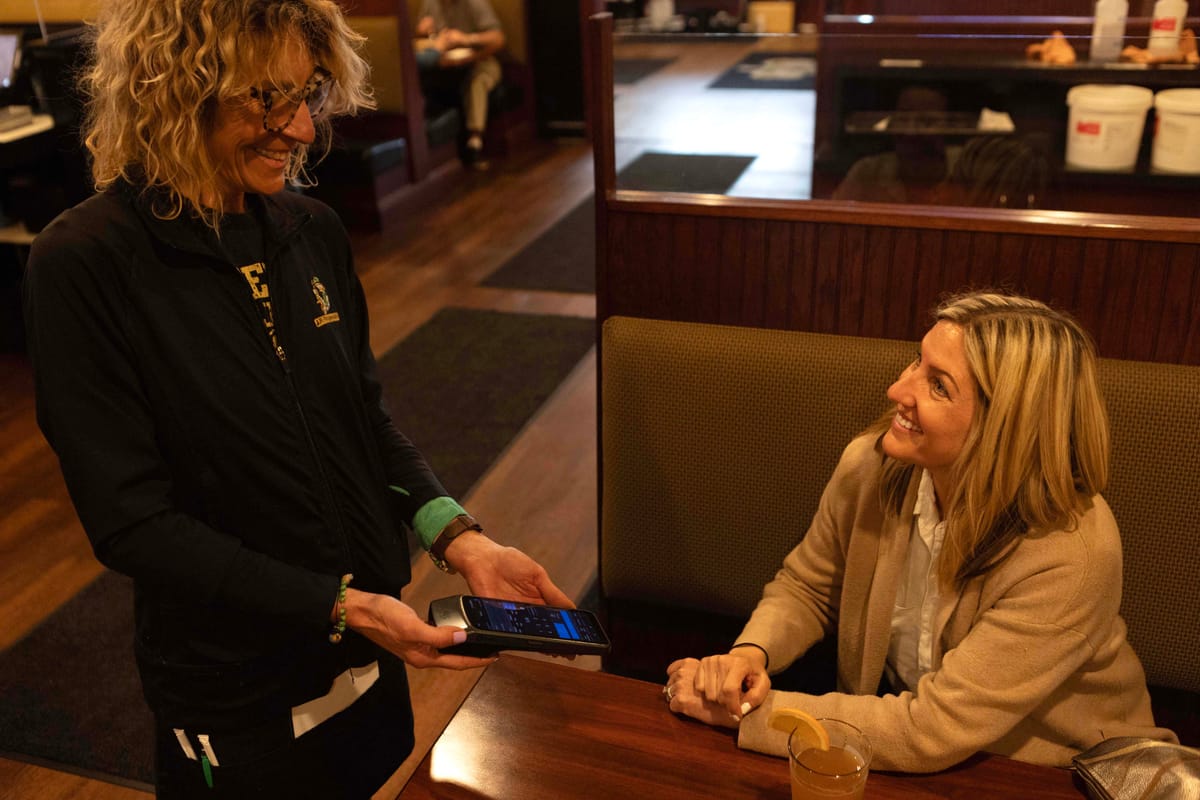
Tipping is engrained in American hospitality culture, but the emergence of requests for tips in spaces beyond restaurants and the tip jar at a cafe has some Americans feeling ‘tip fatigue’ and burnt out by the concept of tipping altogether. A popular Reddit feed is filled with accounts of tip requests from places like car service stations, movie theaters, stationery stores, airport kiosks, and even wedding dress shops.
To better understand the tipping landscape, SpotOn surveyed over 1,000 restaurant industry workers across the United States for their opinions on the current state of tipping in the country, including tipping expectations, the impact of ‘tipflation,’ understanding of tipped workers’ pay, restaurant workers’ own tipping habits, payment preferences, and generational differences.
"SpotOn Restaurant Tipping Report"
Tipping Expectations
With reports of ‘tipflation’ saturating our news feeds, the results of a first-of-its-kind survey of restaurant workers by SpotOn were somewhat surprising: restaurant workers and consumers aren’t actually very far apart on tip culture. A majority of tipped workers (52%) only expect a 15% to 19% tip based on service, and survey respondents say that the tips they receive aren’t experiencing the notable fluctuations reported.
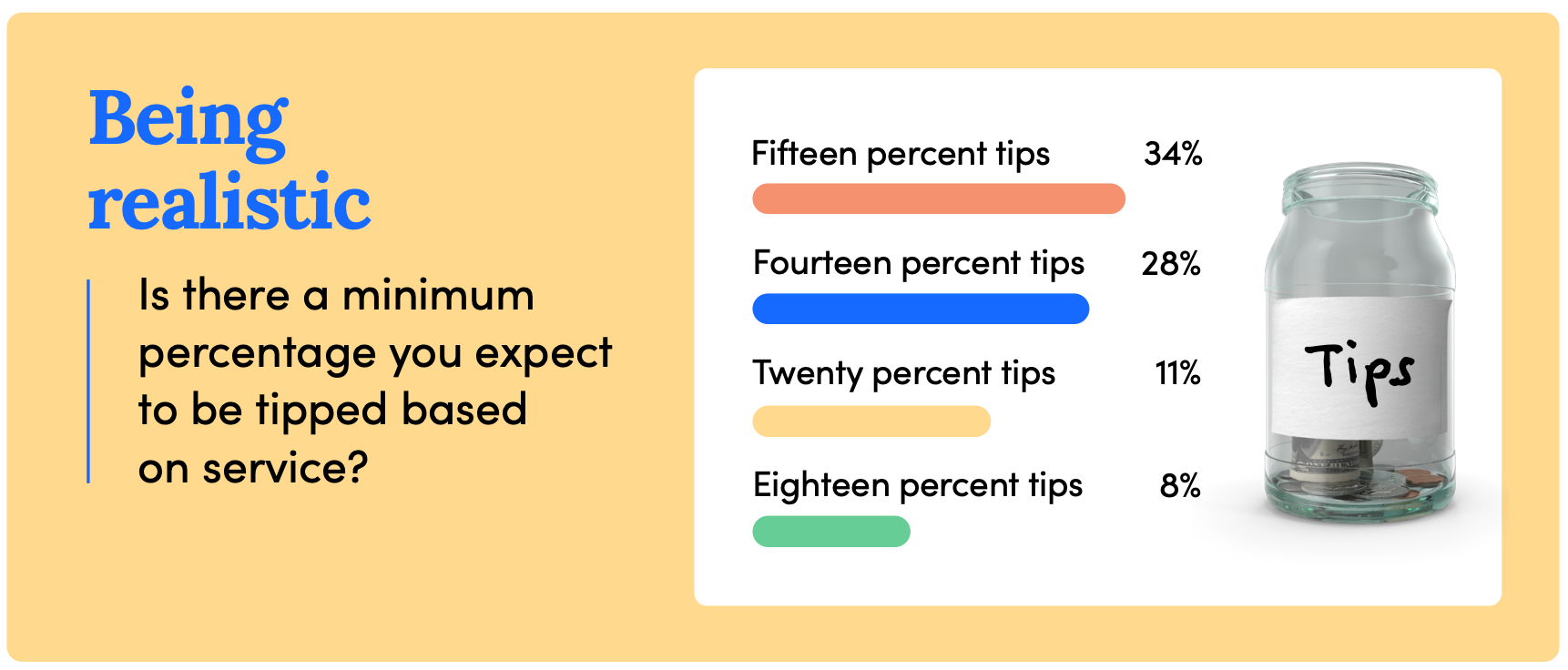
Notably, only 1 in 5 tipped workers expect to be tipped 20% or more based on service. This aligns with recent Pew Research Center findings that a majority of Americans say they would tip 15% or less for an average meal at a sit-down restaurant, with only a quarter of people saying they’d tip 20% or more. If their restaurant does add an automatic gratuity, 46% of tipped workers do not expect customers to leave an additional tip.
This new data contradicts widespread reporting about increased tipping. Instead, tipping trends at restaurants remain relatively consistent. Internal data from SpotOn showed an average tip of 18.99% on orders placed through the SpotOn Restaurant point-of-sale system for the month of March. This is consistent with the 19% average reported in March 2023.
With industry expectations matching the commonly accepted tip amounts, restaurant workers say they are comfortable with the current tipping culture. Nearly half (47%) of survey respondents who receive tips said they feel positive about the current tipping culture in the restaurant industry, 26% were neutral, 15% don’t like it but view it as necessary to get the pay they deserve, and only 8% felt that tipping culture is negative and harming the industry.
The Impact of ‘Tipflation’
Tipped workers also showed limited concern about tipflation’s impact on their earnings. In fact, most (65%) of the more than one thousand people surveyed indicated they did not see adding tips to non-hospitality services as detrimental to their take-home pay.

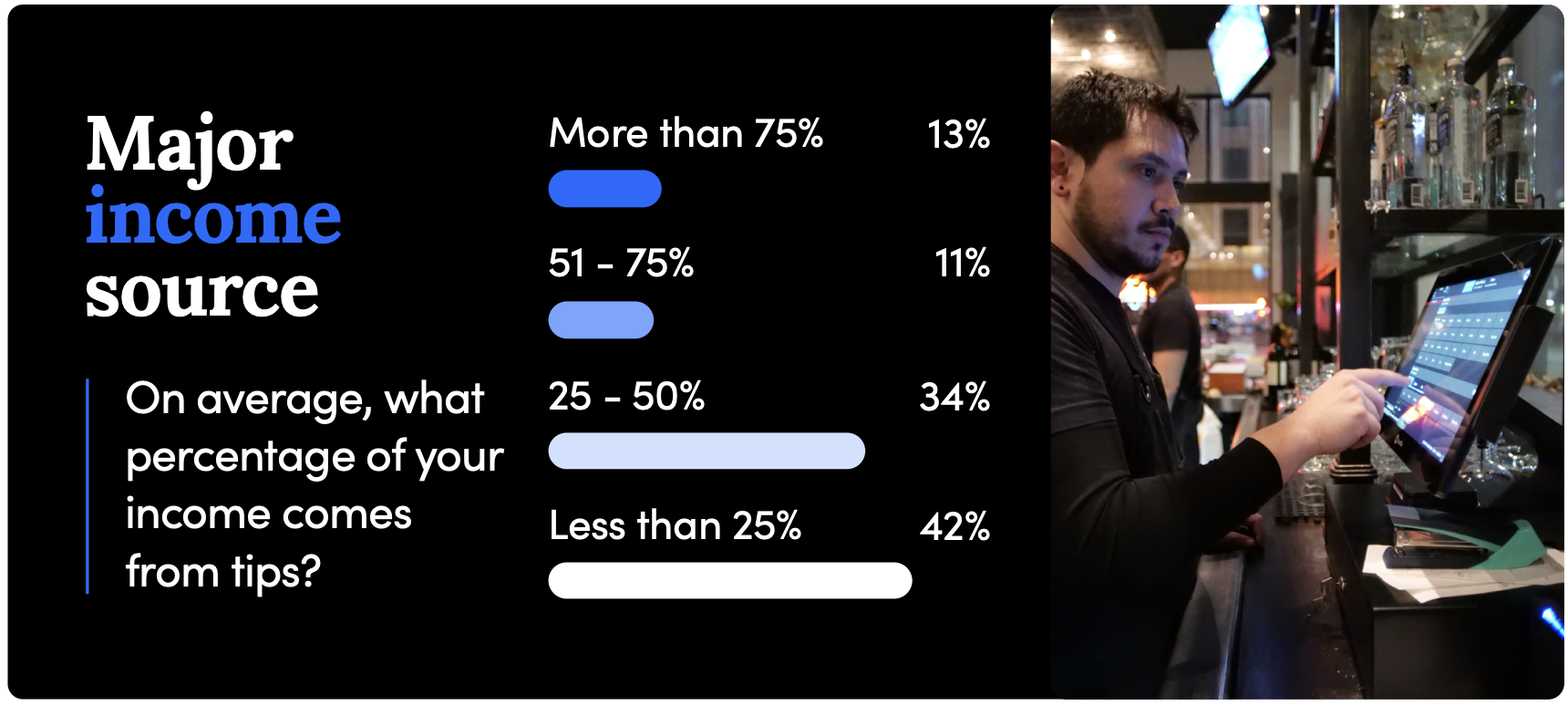
However, given how essential tips are to restaurant workers, the narrative around ‘tipflation’ and consumer tip fatigue has the potential to hurt hard-working hospitality staff. Most tipped workers (45%) said that between 25% and 75% of their income comes from tips. This wide range can be attributed to several variables, including minimum wages across the country, service levels, and more. Still, it is clear that tips remain a significant part of their livelihoods.
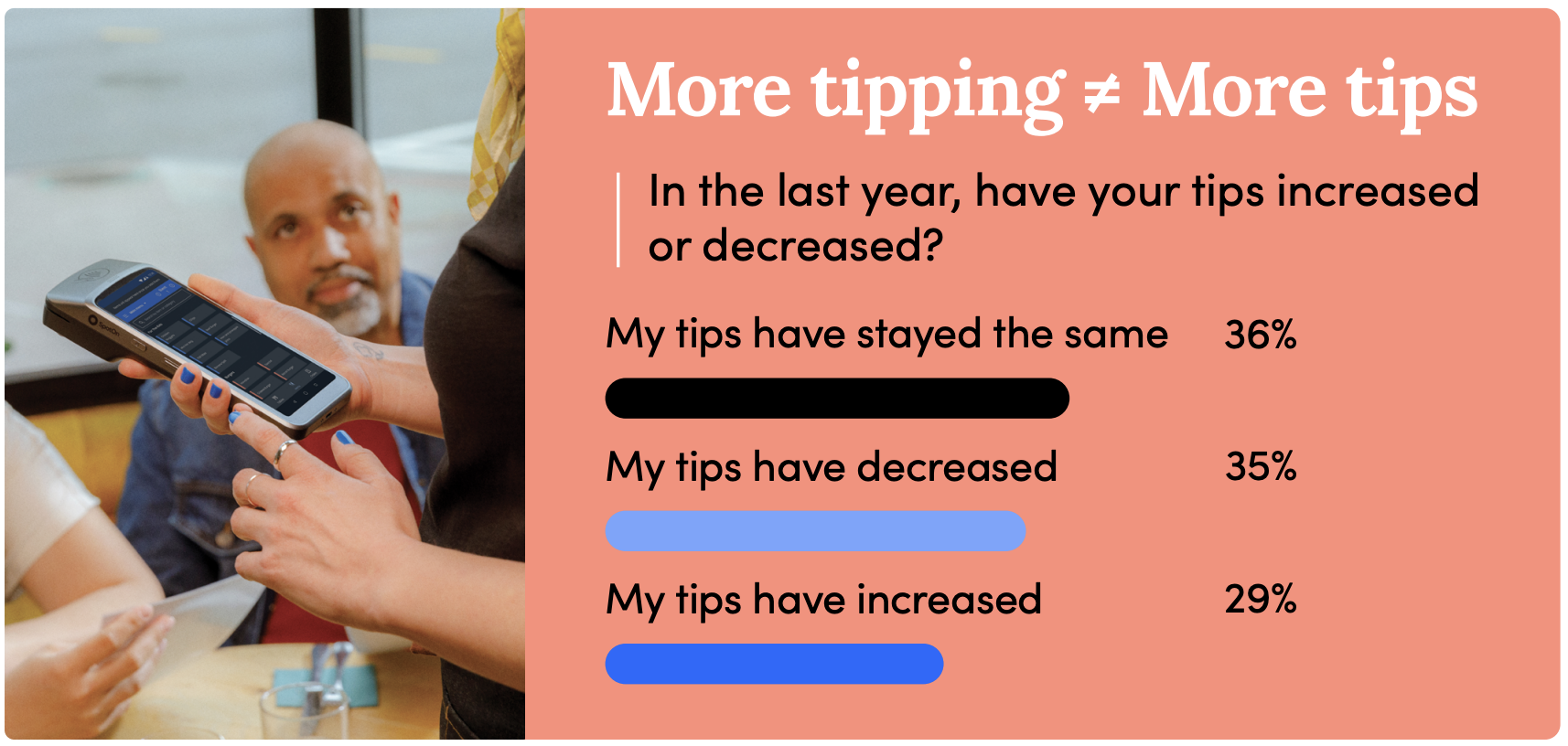
While tipping fatigue, driven by a wider range of businesses where gratuity is an option, is real, the survey shows that restaurant workers are not benefiting financially from the trend—36% of tipped workers reported no change in their tips over the last year, 35% actually reported a decrease, and only 29% of respondents reported an increase.
Understanding Tipped Workers’ Pay
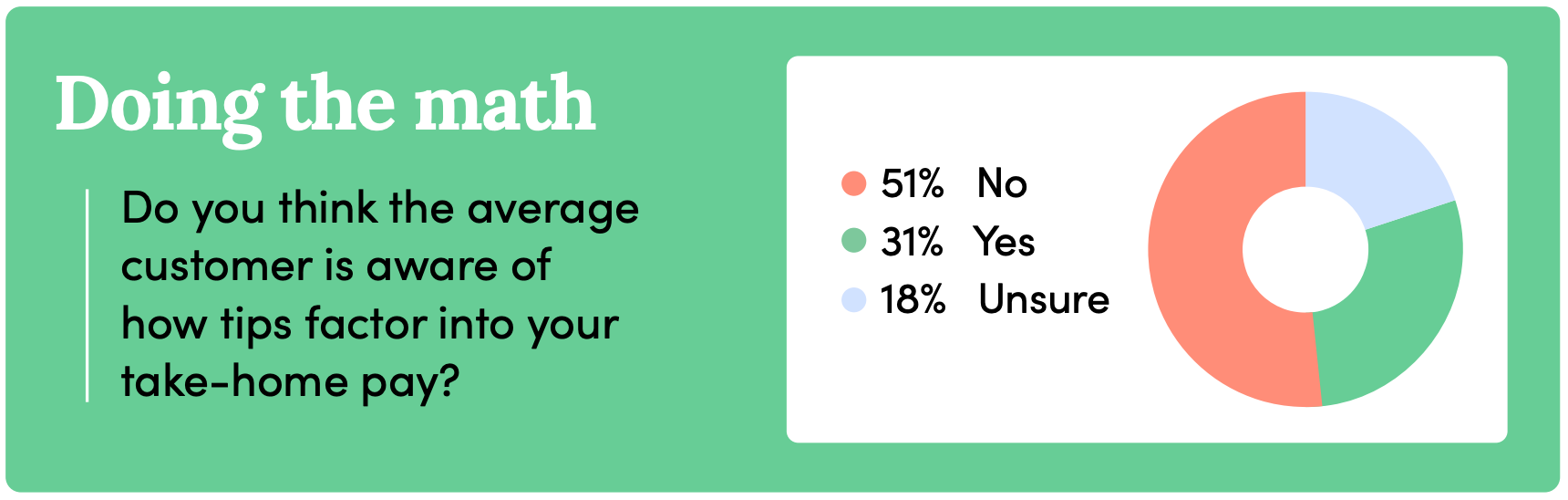
Another consensus revealed in the survey was that more than half of respondents (51%) who receive tips believe that customers don’t fully understand how tips factor into their wages. 31% gave patrons the benefit of the doubt, while 18% were unsure.
Most industry workers receive a tipped minimum wage combined with tips to reach the federal minimum wage. The tip credit compensation model maximizes server earnings, allows operators to hire ample waitstaff, and keeps menu prices affordable. According to the National Restaurant Association, “This optional compensation model means that tipped workers never make less than the prevailing minimum wage—in fact, they often make much more. Nationally, tipped servers take home a median of $27 an hour, with the highest-paid making more than $41 an hour. This is typical for the restaurant industry, which operates on unimaginably slim margins, often five to seven percent, and where every dollar and cent makes a difference.”
As far as how they prefer to receive their tips, cash is still king — 89% of restaurant workers who receive tips say that they prefer their tips in cash form over credit card and digital payments like Venmo.
Restaurant Workers’ Tipping Habits
Industry workers who choose to dine out at restaurants are big tippers. 86% of tipped respondents say that they are better tippers having worked in the industry, with 44% of all industry (tipped and non-tipped) respondents doling out 20% tips or higher when dining out at a restaurant. A majority of respondents (35%) say they tip ten percent or less when ordering takeout.
When all survey respondents, including non-tipped industry workers, were asked what types of restaurants they believe warrant tipping, 81% of respondents selected full service, 78% selected fine dining, 32% fast-casual, 30% counter service, and a surprising 16% said fast food/drive-thrus should get tips.
The Role of Tech in Tipping
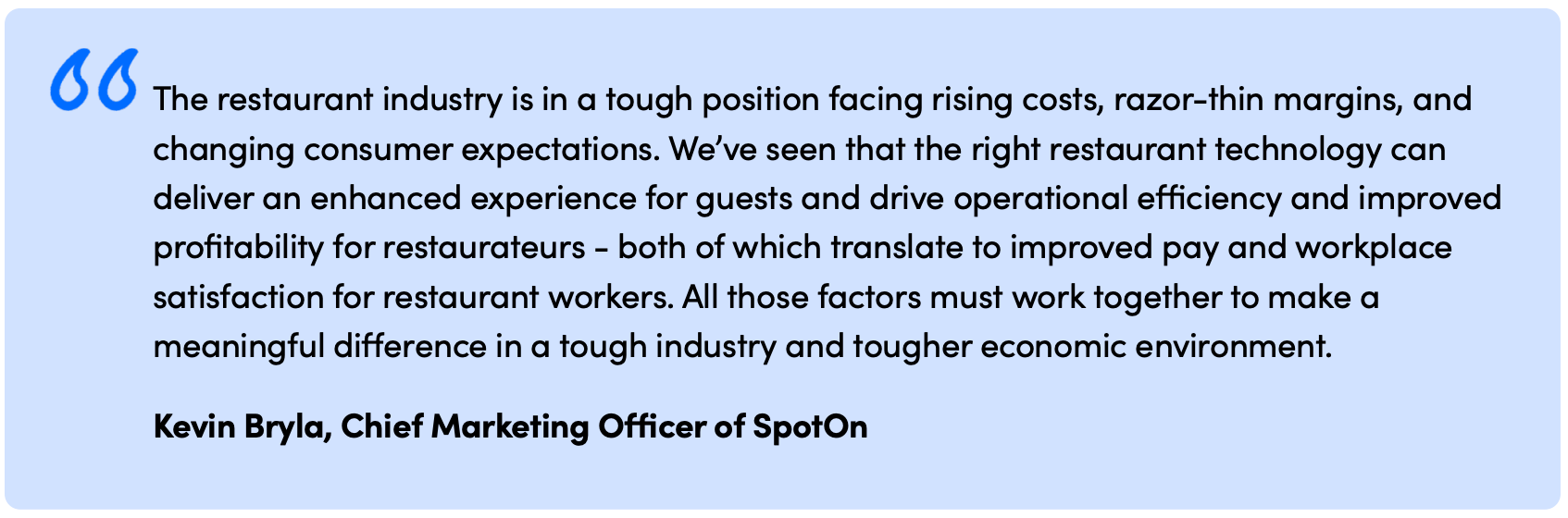
For years, restaurants have been working to optimize payments, reservations, staffing, and inventory management with digital solutions to improve their bottom line. Innovation in restaurant technology, even small changes like handheld point-of-sale devices and pre-set tip amounts, can help speed up transactions and increase ease of use, providing better outcomes for restaurant staff and customers.
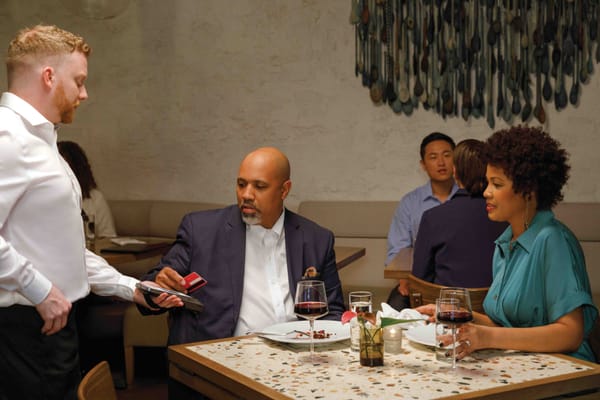
Staff can take orders and payments in real-time with handheld devices, which improves staff efficiency and speed of service and results in a better guest experience and better tips. Restaurants using SpotOn handhelds typically see their average ticket price and tip amount go up, and staff can cover more tables when using them, resulting in more tips throughout their shifts and higher take-home pay. While tip percentages have remained stable, technological efficiencies are improving operations.
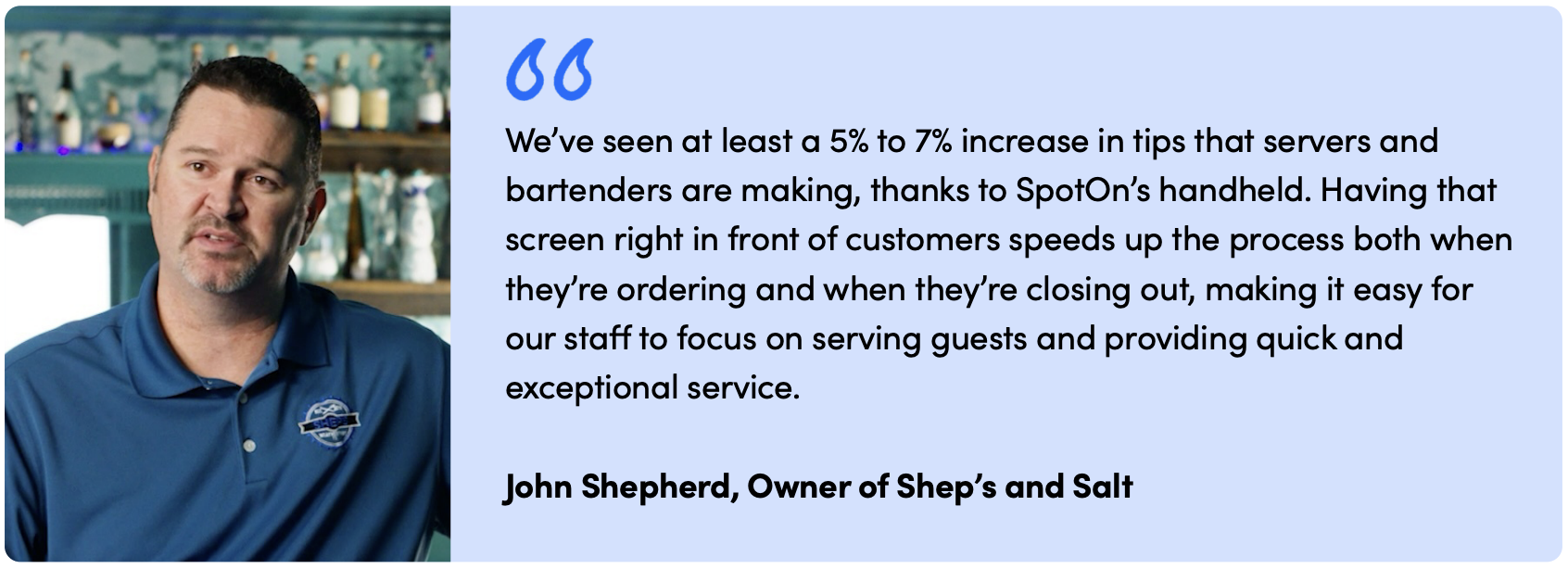
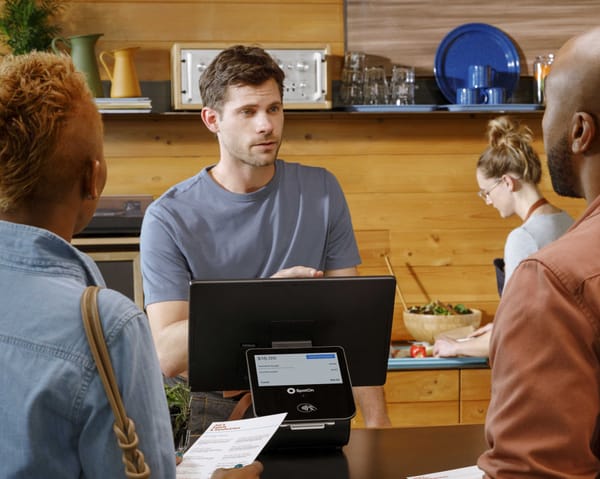
Industry workers are generally optimistic about predefined tip amounts on customer-facing point-ofsale systems. 43% of respondents who receive tips said that predefined tip amounts are helpful to both customers and servers, and 28% say they love the technology and it helps with their earnings.
While most tipped respondents think we should stick with the standard 15%, 18%, and 20% on-screen tip options, a significant 44% indicated that even a ten percent option would be suitable, reinforcing other collected data that shows restaurant industry workers actually have modest expectations when it comes to tipping. Default preset tip amounts on the SpotOn Restaurant point-of-sale are 15%, 18%, and 20%, aligning with expectations from both parties, though the company recommends prompts be customized for each restaurant based on their service type and geographic location, among other factors.
Generational Differences
Generationally, differences in both tipping practices and strategies used by hospitality staff emerged in SpotOn’s findings. Everyone surveyed agreed that Millennials and Gen X are the best tippers, while Gen Z and the Silent Generation are less generous.
While most agree that different types of restaurants warrant different tips, the situation varies between generations. One in four 18-to 24-year-olds feel that fast food restaurants and drive-thrus warrant tipping, while only one in 20 of those 65+ feel so.
Beyond leveraging technology to improve service, survey participants were asked if they use any other strategies to increase their tips.
Younger generations report that they are more likely to change their appearance through their hair, makeup, or outfits to gain more tips with 24% of 18-24-year-olds using this strategy. Asking for a guest’s name and using it throughout their experience, and writing a personal note on the receipt are popular strategies among all age groups. 40% of those 65+ report using no strategy to increase their tips.

Survey Methodology
Conducted in March 2024, the survey asked over 1,000 restaurant industry workers across the United States their opinions on the current state of tipping in the country. Respondents were from a split of urban, suburban, and rural areas across the West, Midwest, Northeast, and South and worked in a variety of restaurant settings, with 23% working in full-service family dining restaurants, 23% in casual dining, 19% in quick service, 15% in fast casual limited service restaurants, 12% in coffee shops, and 8% in fine dining. Regarding roles in the restaurant, 27% identified themselves as manager, 23% as a server, 22% as kitchen staff, 14% as “other,” 8% as host/hostess, 5% as bartenders, and 2% as busser.
About SpotOn
SpotOn is the top-rated software and payments company that’s quickly garnered a reputation for providing the technology and support that helps local businesses—and the people who run them—to succeed on their own terms. Known for its flexible, cloud-based technology and personalized support, SpotOn offers an end-to-end platform to accept payments, boost revenue, streamline operations, and create exceptional guest experiences. SpotOn’s integrated product set for restaurants includes point-of-sale, online ordering, labor management, QR order & pay, waitlist & reservations, marketing & loyalty, automated cost analysis and comprehensive reporting.
SpotOn provides intuitive technology that "works the way you work,” and backs it up with a 24/7 support team that make sure it always does—with fairness, flexibility, and a personal touch. Many of SpotOn's employees have worked in hospitality for years and deliver the level of expert service and support that sets SpotOn apart from other POS companies.