
The best way to speed up checkout at your restaurant is to remove any unnecessary waiting and steps from the payment process. Giving diners the option to pay from their phones or enabling servers to close checks at the table can eliminate the back and forth that makes checkout take longer than it should.
Slow checkout might feel like a minor problem, but it can be a frustrating end to an otherwise amazing guest experience while keeping tables occupied longer than what’s good for your bottom line.
You need a solution that speeds up checkout and helps you turn tables more efficiently without making customers feel rushed or putting more pressure on your team.
In this article, we’ll take a look at:
- How to identify and eliminate common checkout bottlenecks
- How faster payments can improve table turns without rushing your guests
- How to audit your checkout process using our checklist to fix your biggest bottlenecks
Let’s begin by breaking down the existing issues with restaurant checkout.
Why restaurant checkout takes longer than it should
Most checkout delays aren’t caused by one major problem. They’re the result of several small steps that add up over time, especially during peak hours when servers are managing multiple tables at once.
The bottlenecks typically seen in restaurants go something like this:
- Customers waiting for a server to notice they are ready to leave and would like the check
- Servers deliver the check, then have to wait for the table to put out their card or cash
- Servers collect the payment, walk to the back, then have to wait for the POS system to open up because other servers are using it
- If the check is for a larger party, that often means taking the time to split up the check
- After running the payment, servers have to make another trip across the dining room to deliver the final receipts
On their own, each of these delays may seem insignificant. But twenty seconds here, a full minute over there, multiplied across every table and every server on your floor, adds up quickly over the course of a shift. And when diners are sitting at tables waiting to pay, those tables aren’t available for the next party.
That’s why improving checkout speed isn’t about asking your employees to move faster. It’s about looking at each individual step between a customer asking for the check and leaving the table, then finding where you can eliminate unnecessary wait time and work.
Here are three ways you can remove those bottlenecks to make checkout faster and more efficient.
1. Let guests pay when they’re ready to leave
One of the easiest ways to reduce wait times at checkout is to remove the need for guests and servers to wait on each other. With QR code payments, guests can scan a code at the table, view their check, and pay from their phone whenever they’re ready to leave.
They can use a credit or debit card, Apple Pay, Google Pay, or other digital wallets to complete the payment in under a minute. There’s no waiting for a server to bring the check, collect a card, access the POS system, and return with a receipt. In fact, 30% of guests choose to pay by QR code when the option is available.
That doesn’t mean every guest has to use their phone to pay. Mobile payments can complement your existing checkout options, so customers who prefer cash or traditional card payments can still pay through their server.
The difference is that any guest who is ready to leave no longer has to wait for their server to start the checkout process. At the same time, your employees have one less task vying for their attention during peak times, helping them get through the rush and provide better service for the rest of their tables.
2. Close checks at tableside and eliminate unnecessary trips
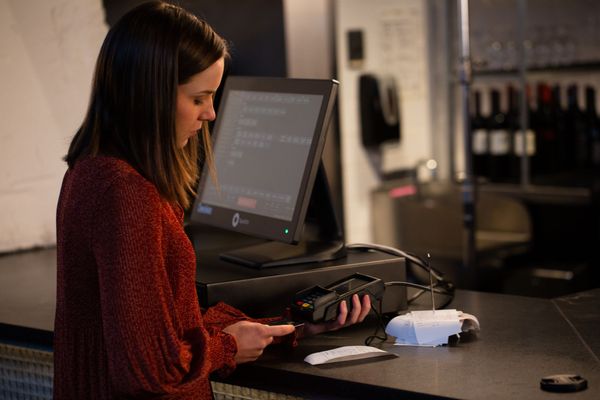
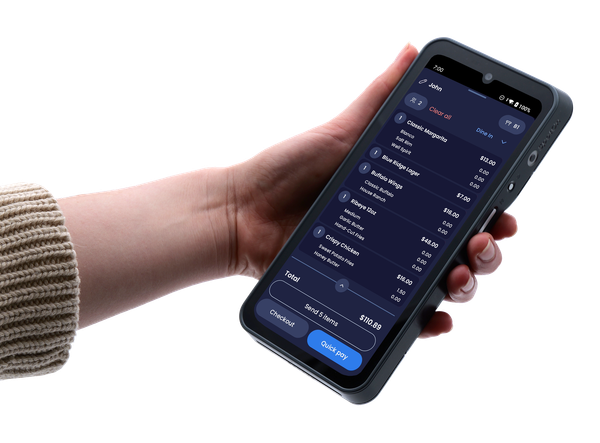
Handheld POS systems enable servers to close checks without having to leave the table. Once a customer is ready to pay, servers can pull up their check, accept payment, collect their tip, and complete the transaction on the spot.
The process becomes even faster when customers use contactless payment or tap-to-pay. Diners can tap a card, phone, or mobile wallet directly on the handheld. The transaction is processed on the spot, and they can receive a digital receipt without adding any additional steps for the server.
Each of these tableside transactions can make a significant difference during a busy shift. For example, J.P. Fitzgerald’s saw wait times cut by as much as 30 minutes while increasing average checks by 20% after introducing tableside payments.
WATCH: Faster, Better Service with SpotOn Handhelds at J.P. Fitzgerald's Restaurant
Just as importantly, handhelds allow servers to stay present in their sections instead of leaving the floor every time someone needs to pay. That means they can close out one table while still keeping an eye on their other diners, making themselves more efficient without sacrificing good service elsewhere in the restaurant.
3. Take the hassle out of split checks and tipping
When a server forgets to ask whether a group will be splitting the check before everyone orders, it can turn what should be a quick checkout into a time-consuming process, especially for larger parties. Servers then have to figure out who ordered what, divide shared items, run several cards, and return multiple receipts before the table is finally ready to leave. Mobile payments and handheld POS systems can make managing these complicated transactions significantly easier.
Let guests split and pay their own checks
Mobile payments give guests the ability to split the check and pay their individual portions right from their phones. Instead of relying on their server to organize every individual payment, each guest can take care of their portion when they are ready.
For customers who still prefer to pay through their server, handhelds can make splitting the check easier for your employees, too. Instead of trying to memorize who ordered what, then running back to the cash register to sort everything out, servers can move individual items onto new checks and process multiple payments right at the table.
Make tipping part of the payment flow
Customers figuring out tip percentages can be another major bottleneck during checkout. Let’s be honest, who hasn’t felt the pressure of everyone looking at you when you’re trying to manually calculate 20% of $73.26?

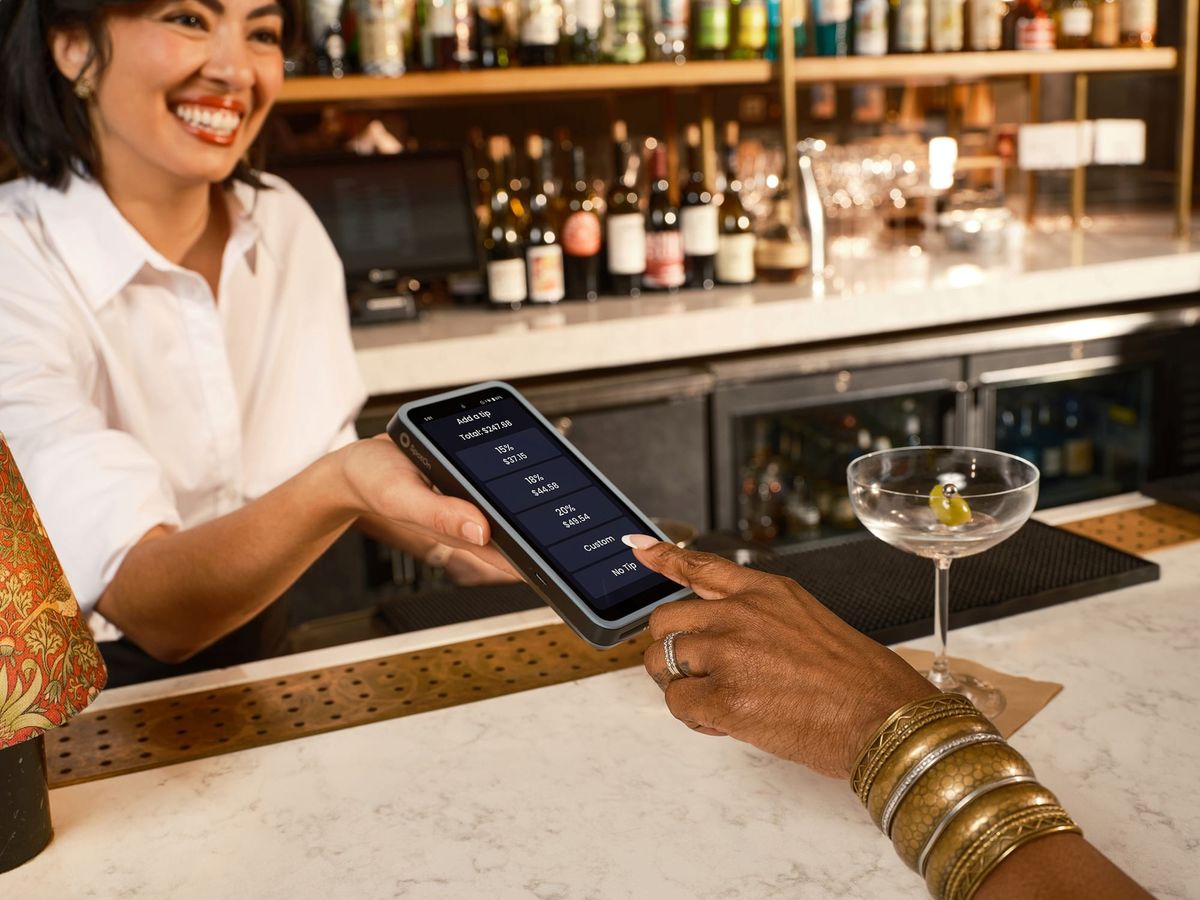
Preset tip prompts built directly into the checkout process make this significantly easier and can improve customer satisfaction at the end of the meal. Guests can choose a selected percentage, like 15% or 20%, or enter a custom amount before completing their payment, eliminating the need for manual calculations. The goal isn’t to rush customers through either step. It’s to make splitting and tipping easier so that once your guests decide they’re ready to leave, the checkout process doesn’t slow them down.
How faster checkout helps you turn tables and increase revenue
Improving checkout efficiency does more than help customers leave when they’re ready. When you eliminate five or ten minutes of unnecessary wait time at the end of a meal, you can get the table ready for the next party sooner without asking anyone to eat faster or leave before they’re ready.
That faster turnaround becomes particularly valuable when your dining room is full, and there are customers waiting for a table. With 54% of diners avoiding restaurants with wait times longer than 30 minutes, keeping that line moving can be just as important as speeding up checkout itself. Let’s take a closer look at what that can mean for your restaurant.
Turn tables faster without rushing your guests
The time we are talking about saving isn’t during guests' actual meals. It’s the dead time after they're done eating and are ready to leave. That dead time can increase dramatically when it’s busy because servers are being pulled in ten different directions at once.
For example, if a party finishes eating but spends another ten minutes waiting for the check and completing payment, that’s ten minutes the next party can’t use the table. Cutting down that wait time allows you to reset and reseat tables sooner, which means serving more customers, increasing covers, and creating more sales opportunities without adding more tables to your dining room or trying to subtly rush people who are already seated.
Meet customer expectations at the end of the meal
There’s also a customer satisfaction benefit to consider. A great dining experience can still end on a sour note when guests have to wait too long to try and flag down their server just so they can pay.
Giving diners a faster way to process payments can make the end of their visit feel just as smooth and convenient as when they first walked through the door. At SpotOn, we’ve seen that restaurants that give guests the option to pay by QR code and leave a review afterward saw their ratings increase by 0.1 stars in about six weeks.
WATCH: Mobile Pay & Review
Collect guest information for future marketing
The handhelds and mobile payments you use for faster checkout can also automatically capture contact information from guests who opt in, giving you valuable data for future marketing. Instead of guests becoming strangers as soon as they leave, you can use that information to stay connected with your customer base through promotions, loyalty programs, and other marketing campaigns to encourage repeat visits.
Check out our restaurant marketing guide to learn more about how you can use guest information to increase customer retention and get more value from the relationships you’re actively building.
Next, we’ll give the exact checklist you need to audit and fix your existing checkout process.
Use this checklist to fix bottlenecks and speed up checkout
You don’t need to overhaul your entire system to improve checkout speed. Start by watching what actually happens during a few busy shifts and identifying where customers and employees spend the most time waiting. That gives you the data you need to prioritize the changes that will have the biggest impact on your operations.
Audit your current checkout process
During your rush, use this checklist to spot where bottlenecks are slowing you down:
• Look for unnecessary trips servers make to complete a transaction
• Check whether a fixed checkout location, such as a stationary cash register or POS system, creates backups when several servers need it at once
• Pay attention to how much time employees spend splitting checks and handling multiple payments for larger parties
• Look at whether your current technology supports mobile POS, contactless payments, digital receipts, and other options that can reduce wait times
• Ask your team which parts of the checkout process regularly slow them down. They deal with these problems every shift and may spot issues that aren’t obvious from the outside
Fix the bottlenecks that cost you the most time
Once you know where the delays are happening, don’t try to fix everything at once. Start with the bottlenecks that occur most often or create the longest wait time. If customers waiting for servers is your biggest problem, implementing QR codes will give diners more control over when they can leave. If your team spends too much time walking between tables and the POS system, using handhelds will eliminate those trips. If split checks regularly slow down service, make sure your handhelds and mobile payment options make splitting easier for both your staff and customers.
After making a change, put it to the test during your busiest shifts. If wait times go down, you know you’re on the right track. If they don’t, keep working your way through the process until you find what’s really slowing you down.
Frequently asked questions about how to speed up checkout at restaurants
How to speed up checkout at my restaurant?
To speed up checkout at your restaurant, identify where customers spend the most time waiting and remove unnecessary steps from the process. QR payments can let guests pay when they’re ready, while a mobile POS can help servers close checks at the table without making extra trips to a stationary POS system. You can also use integrated payment tools to make splitting checks easier and preset tip prompts to eliminate manual calculations, helping both customers and employees complete checkout with fewer steps.
What is the fastest way to process restaurant payments?
There isn’t one payment method that will be fastest for every restaurant or every customer. Offering contactless payments, mobile wallets, and QR code payment alongside traditional options gives customers several ways to pay quickly. Handheld POS systems can also reduce transaction time by allowing servers to process payments at the table.
Does speeding up checkout mean giving up cash or in-person payment options?
No. New technology should give customers more ways to pay, not take existing options away. You can offer QR codes, digital wallets, and contactless payments while continuing to accept cash and traditional card payments. This allows you to improve speed without alienating part of your customer base.
Is QR code payment secure for guests to use?
QR code payment can be secure when it’s provided through a trusted payment platform that protects customer and transaction information. Restaurants should use QR codes generated by their payment provider, keep them in controlled locations, and regularly check physical codes to make sure they haven’t been replaced or tampered with.
Can a small, single-location restaurant benefit from faster checkout tools?
Absolutely. You don’t need to run a large operation to benefit from modern systems that remove unnecessary work. A single-location restaurant can use QR payments or mobile POS handhelds to improve efficiency, while an ordering app can make online ordering more convenient for customers ordering takeout or delivery.
The key is choosing technology that solves a real problem in your operations rather than adding tools simply because they’re available.
How can faster checkout improve restaurant table turnover?
Faster checkout reduces the dead time between guests finishing their meal and the table becoming available for another party. During peak hours, even a few minutes saved on each check can help your team reset and reseat tables sooner, serve more customers, and potentially generate additional sales without rushing anyone through their meal.