
The tools have never been more powerful, the barrier to entry has never been lower, and every operator I talk to is asking the same question: should I build this myself, or should I buy it? Here's how I think about it.
Build the custom stuff. Buy the critical path.
Start with a simple line. Build when the thing is custom to how you run your restaurant and it isn't sitting in your critical path. If you want to look at data you already know to be true and display it your way, build away. You're just reflecting reality back to yourself, and the downside is basically zero.
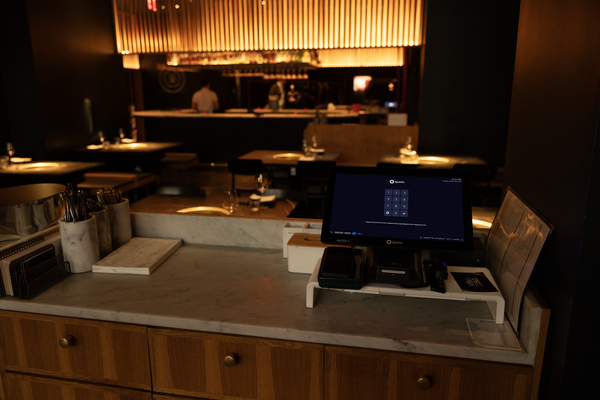
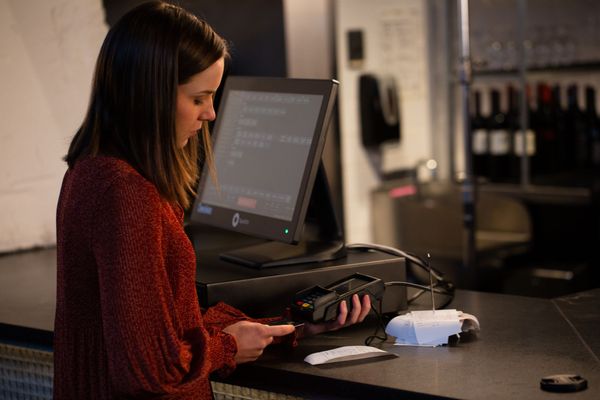
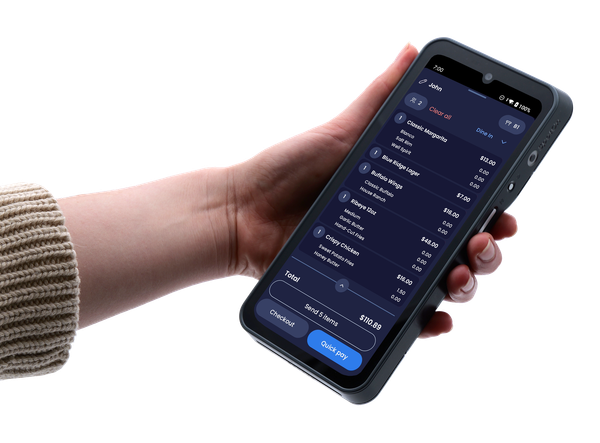
Buy when the system has to be right every single time. Your restaurant point-of-sale is the clearest example there is. You do not want AI hallucinations at 7pm on a Friday when you're slammed and the line is out the door. That's exactly where scale works for you. The security, the reliability, the uptime that comes from a tech partner running this across tens of thousands of locations is the entire point. Don't rebuild it. That's not the hill to plant your flag on.
One non-negotiable no matter which way you go: wherever your restaurant's data lives, you own it. Full stop. That's the line you protect every time.
The tools are getting easier. The noise is getting louder.
There's a wave of fringe tools spinning up new companies right now, and it's going to overwhelm operators with options. It'll be confusing for a minute. But long-term, more competition and more capability is good for restaurants. The noise is temporary. The leverage is permanent.
And a dashboard that shows your data exactly the way you want to see it is one of the coolest things available to an operator today. If you're comfortable with a tool like Claude or ChatGPT and you have a non-standard way you like to read your numbers, there has never been a better moment to go get after it.
Where building actually wins
The edge shows up when you have a specific, non-standard workflow. That's where building your own thing genuinely differentiates you, because no vendor is going to nail a process that's unique to you.
If the workflow is standard, building it yourself only makes sense when the vendor alternative is really expensive. Otherwise you're spending real energy recreating something that already exists.
I'll be straight with you: I don't yet see many cases where an in-house build is orders of magnitude better than what you can buy. A lot of effort is going into closing a gap that's already small. That said, this gets easier every quarter, and operators are getting more comfortable building. The calculus keeps shifting toward build, and it's going to keep shifting.
The real test isn't the tool. It's the number.
Here's where operators trip. The test can't be "my product vs. their product." Bias of authorship makes every one of us believe our own thing is excellent.
The test is the number. Pick the outcome you were actually trying to move — total sales, covers per hour, average tips per server because you armed your staff with data that made the hospitality demonstrably better — and look at whether it moved. If you built a tool and your servers are taking home more in tips because of it, you have differentiation. If you can't point to the number, you’ve built maintenance work. Focus on the outcome, not the artifact.
What are you not doing while you build?
Let's be real about what's on an operator's plate: training staff, watching how the guest experience actually plays out, working the front of house and making people feel welcome, tracking competitors, and how the market's shifting. A thousand demands, all of them real.
So here's the line. If you know what you need, you've looked for it, and nobody out there is providing it, then building it yourself is a great use of your time. That's not a distraction from the business. That's you refining an edge nobody else can hand you.
But the bigger point is this: getting comfortable with these tools is not a cost. It's sharpening the axe you swing every day. I think about my own friends and family running restaurants, and I wish they'd spend even 30 minutes a week just playing with this stuff. Do that, and it stops feeling like a tax and starts feeling like a skill. The operators who build that muscle now are the ones who will compound it for years.
We're learning from the operators who build
Some of the most interesting input we get at SpotOn comes from customers building their own solutions. Our most tech-savvy operators are diving deep to solve a specific problem they own.
One sticks with me. A sophisticated operator built his own menu optimizer. It looks at his menu layout, his pricing, his product mix, and it pulls in the psychology of how you actually design a menu that sells. That's a restaurant owner out-building a category.
That kind of work tells us two things: what operators genuinely care about, and how to prioritize the order we build in. It's not just shaping what we build. It's shaping when.
What this does to product strategy
We're heading to a world where the customer's ability to customize their own solution skyrockets. That's a great thing, as long as we deliver faster without dumping a pile of noise on operators that they then have to sift through. Speed that creates confusion isn't speed.
The real shift is tighter feedback loops between the moment we learn an operator wants something and the moment we get a true prototype in front of them. A huge part of product management is knowing what not to build. Prototyping is about to help us enormously there: get a prototype out without engineering, validate it with real operators, iterate, land on the right thing, and then have engineers build it right the first time. Less waste, faster learning, better bets.
If you think you can build it better than your partner
The real question isn't can you. It's how much of your time do you want to spend on it?
I know for a fact I can grow my own oranges and churn my own butter. But that's not how I want to spend my time. For some operators, tech is their passion. They love getting in, iterating, tinkering. Have at it. The technology has never been easier to pick up, and if you've got a genuinely unique situation where the solution only exists for you, go build it.
But most operators I know want to run an exceptional business and deliver a hospitality experience people remember. If that's you, and you care about the outcome rather than the building exercise itself, then rent it. Find a partner who handles the building, the testing, the reliability, the hallucinations — all the parts you don't want to babysit. Then pour your energy into the one thing you want to be world-class at, which I'm guessing is running a really, really good restaurant.
That's the whole game. Build what only you can build. Rent the rest. And keep your eyes on the number.