

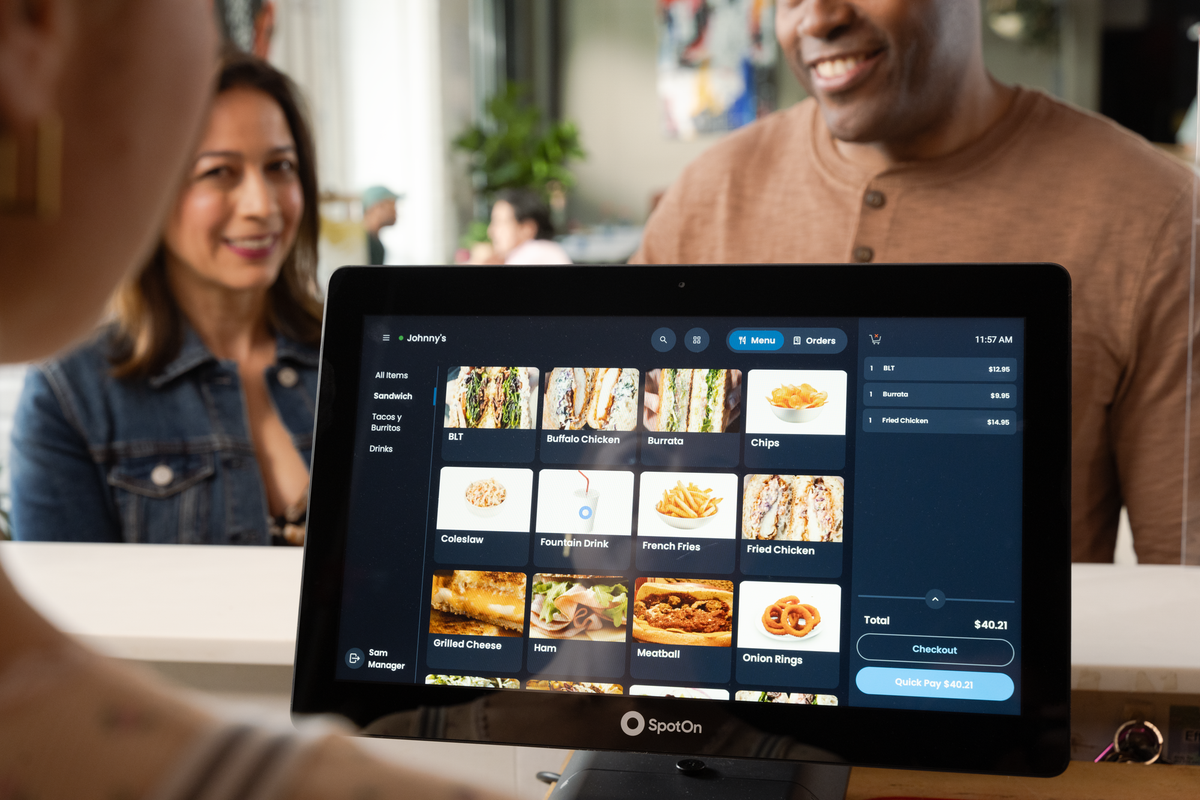
Marketing often falls to the bottom of a restaurant's priority list, and it's not for lack of caring. Rather, it’s a matter of not having the time and tools to handle marketing efficiently. A restaurant point-of-sale with built-in marketing tools is a great solution, but not all POS systems are created equal.
Some POS providers build for corporate brands with entire marketing departments behind them, while independent restaurants are left to figure it out on their own, squeezed in between managing staff, keeping the kitchen running, and the hundred other things a shift requires. Sending a promotional email or setting up a loyalty program is often the first thing that gets pushed to "next week."
But marketing isn't optional. It's one of the more direct ways to get discovered by new guests and bring return guests back to fill seats during slow shifts. A POS platform with built-in marketing tools closes that gap, helping you attract new guests and drive repeat business without adding extra work to your day.
What marketing tools should a restaurant POS system include?
A POS platform with real marketing tools should give you:
- Guest data capture from online ordering, digital receipts, QR payments, reservations and waitlist, etc. so every booking and guest touchpoint adds to your guest database automatically
- Email campaigns you can build and send without a separate email service
- SMS text-messaging for time-sensitive offers
- Social posting to Facebook, Instagram, and Google, all from one place
- Branded, redeemable deals your guests can use in-store or online
- Loyalty tracking tied to visits, spend, and birthdays
- Performance tracking, so you can see opens, clicks, and redemptions in that same dashboard
If any of these live in a different tool than your POS, you're the one stitching guest data together by hand, and that's exactly the gap a connected restaurant marketing system is meant to close.
Which POS system is best for restaurant marketing?
Forbes Advisor's 2026 restaurant POS rankings named SpotOn "the best POS system for restaurants that want marketing", citing its built-in email, social, and review-management tools as a standout for restaurants without a dedicated marketing team. For independent restaurants, SpotOn is generally the strongest fit on marketing specifically.
That said, the right POS depends on what your restaurant needs most:
- Square is best for quick-service restaurants that want fast DIY setup and simple order-taking, though its marketing tools live outside the free plan.
- Toast stands out for back-of-house heavy operations, thanks to its kitchen display system and durable hardware, but marketing, loyalty, and online ordering are separate paid add-ons.
- Clover excels with reporting and analytics across locations, but marketing takes a back seat to the sales and labor reporting it's best known for and you'll likely need to sort through their integration marketplace to find a suitable marketing add-on.
If your priority is a POS where marketing is already tied to your guest data, SpotOn is built for that. DIY Marketing comes included with SpotOn POS at no extra cost, with Marketing Assist available if you'd rather have campaigns created and sent on your behalf. Unlike a standalone tool like Mailchimp, which works from a list you build and maintain yourself, SpotOn's list grows automatically from your guest interactions.
That connection changes what your day-to-day actually looks like:
- No manual list-building. Guest contact info populates automatically from digtial orders, reservations, and waitlist check-ins.
- No second dashboard. Campaign performance shows up next to your sales and guest reporting, not in a separate tool.
- No guessing whether a promotion worked. Redemptions tie back to real transactions, so you can see the return on a campaign in the same place you see your daily sales.
- No starting from zero. Every new order, reservation, or waitlist signup adds to your guest list without any extra work on your part.
- No lost history when you switch. You can import an existing mailing list straight into your SpotOn dashboard, so switching POS platforms doesn't mean starting your guest list over.
This built-in approach works especially well for independent restaurants, bars, and cafes. If you're running multiple locations with more complex, segmented campaigns, it's worth comparing SpotOn's marketing tools against a dedicated email service provider (ESP) first, to make sure it covers what your team needs.
WATCH: SpotOn Online Ordering, Marketing Dashboard Drive Sales Increase at Allmine
How does SpotOn Marketing work with your POS system?
SpotOn Marketing comes in two tiers. DIY Marketing is included with SpotOn POS at no extra cost, and it gives you a drag-and-drop editor, customizable templates, and branded deals you build and send yourself. Marketing Assist runs $95 a month for restaurants that want campaigns created and sent on your behalf, once you've set your goals. Marketing Assist is also available with SpotOn’s Core Bundle. (See SpotOn's pricing page for must up-to-date pricing.)
Real clients are already seeing this play out. Chicago Culinary Kitchen saw a 7% increase in sales after putting SpotOn Marketing to work, and Operations Manager Jay Goldberg treats the email list as a genuine investment rather than an afterthought: "Every person that joins our list is someone who wants to spend money with us."
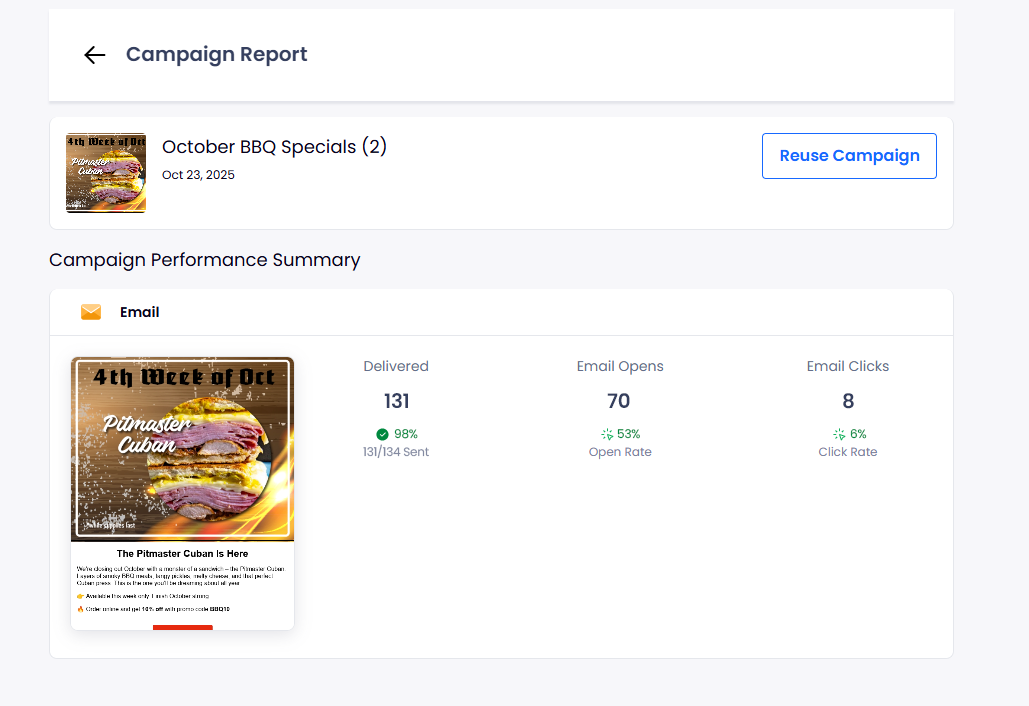
Similarly, Kalei's Kitchenette saw a 3.3% increase in revenue from its very first marketing deal, a fast enough result that it's worth building your first campaign around one strong offer instead of waiting to perfect a full calendar. If you want more ideas to build that first offer around, a 4th of July special or a Father's Day promotion are both easy places to start, since they give guests a reason to visit that's already on their calendar too.
How does SpotOn build my guest list automatically?
SpotOn builds your mailing list from every guest touchpoint already running through your POS, including online ordering, digital receipts at checkout, and your loyalty program. Reservations and waitlist activity feed that same list automatically too. Every time a guest books a table through SpotOn Reserve or adds their name to your digital waitlist, their contact info, visit history, and any notes on preferences or special requests sync straight into their guest profile, the same profile your marketing campaigns pull from. That means a guest who waited for a table last Friday can show up in a win-back email next month, without anyone on your team re-entering their information anywhere.
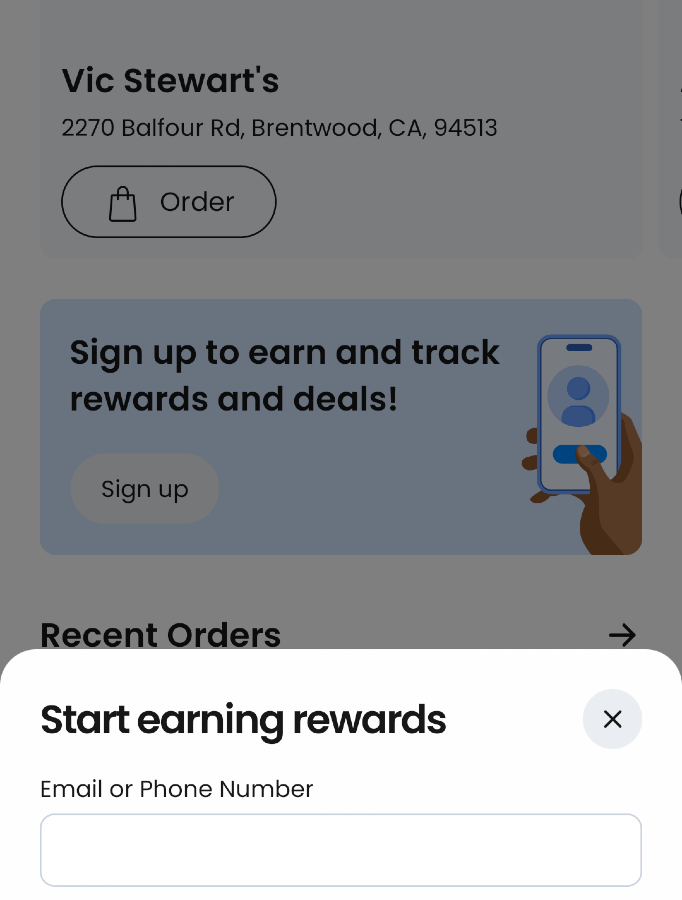
Checkout adds to that list too. With Mobile Pay & Review, guests scan a QR code at the table to pull up their bill, split it, and pay with Apple Pay, Google Pay, or a card, no server trip required. Paying with Apple Pay or Google Pay captures contact info automatically, adding to your guest database without any extra steps for guests or staff, and guests are prompted to leave a review right after paying, while the experience is still fresh.
You can also import a list you already have. Your list grows on its own as guests order, book, wait for a table, and check out, instead of depending on someone remembering to collect an email address by hand.
Do you still need a separate email platform with SpotOn?
For most independent restaurants, no. SpotOn Marketing already does the heavy lifting: one login, automatic guest-data sync, a customizable brand kit for your logo and colors, and campaigns built around guests you know are spending money with you. You can customize pre-made templates with an easy to use drag-and-drop editor or create custom campaigns from scratch. A dedicated ESP is worth adding only if you need deep template design or complex multi-step automation, tools built for teams whose full-time job is email marketing.
Mi 'N Tea is a good example of that trade-off paying off. Owner Kim Dieu went from marketing once a month, sometimes skipping it entirely, to running it consistently in a fraction of the time through SpotOn’s ‘set it and forget’ Marketing Assist solution: "Now it takes just 15 minutes, my customers are receiving relevant emails each week." If you're running multiple locations with complex, segmented campaigns, compare SpotOn directly against a dedicated ESP, and a look at your restaurant tech stack can help you see where marketing fits alongside your other tools.
Quick answer: So, what's the best POS for marketing tools?
SpotOn Marketing is included free with SpotOn POS, with an optional automated tier called Marketing Assist for restaurants that want campaigns handled for them. It's built for operators who want email, SMS, social, and loyalty running off the same guest data as their POS, rather than managed through a separate platform. It's the strongest fit if you're an independent restaurant that wants less admin, and if you operate multiple locations with complex segmentation needs, it's worth comparing against a dedicated ESP before you commit.