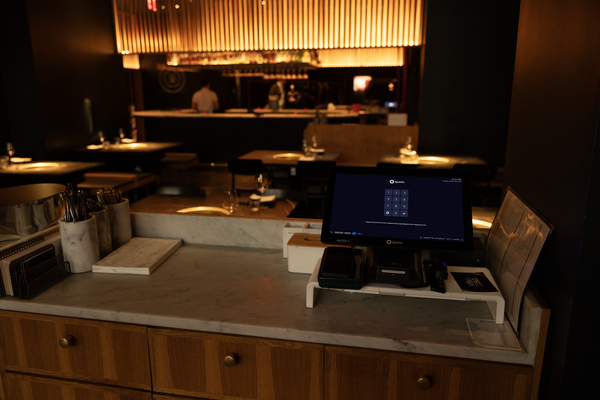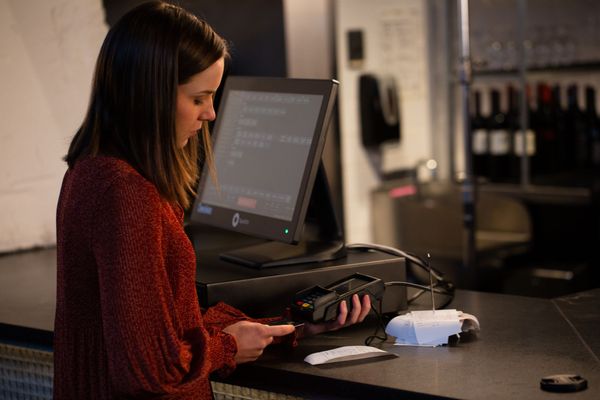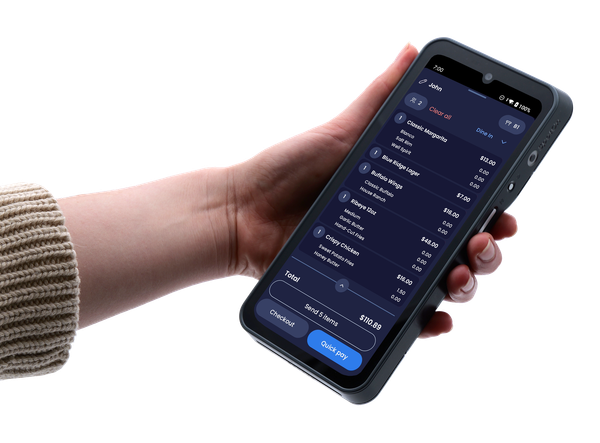


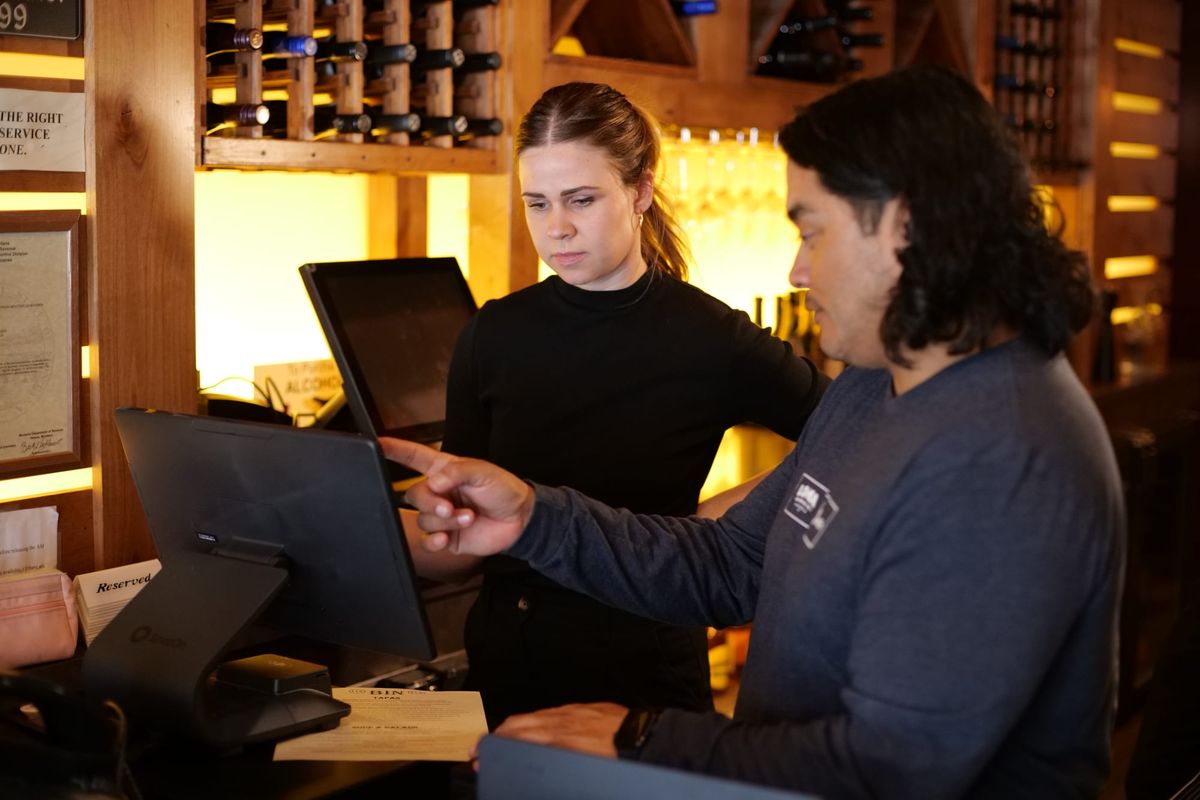
- How staying on the wrong POS platform costs you money, talent, and guests — even when you can't see it on a report.
- The eight most common signs your current point-of-sale is holding you back, from unreliable uptime to a provider whose priorities no longer match yours.
- What to look for in your next restaurant POS, and the questions to ask before you sign anything.
- How to make the switch the right way so your first 60 days on SpotOn are better than your last 60 days on anything else.
Part 1: Signs it's time to switch your restaurant POS
No operator abandons their point-of-sale on a whim. The decision builds slowly, one frustrating shift at a time. Here are the most common warning signs your current platform is costing you more than you realize.
1. Your POS is costing you money you don't know about
POS pricing can be deceptively complicated. The monthly software fee is just the beginning. Long-term contracts, proprietary hardware requirements, processing rate lock-ins, and fees for add-ons….it all adds up in ways that aren't obvious when you first sign on.
A POS can also cost you your reputation with guests when it either doesn’t work properly or your POS provider inserts itself between you and your guests. A few years ago, a major POS provider began tacking a 99-cent fee onto every guest's online order over $10 — without consulting the restaurants on their platform. The backlash was swift and fierce. The provider reversed course within a month, but the damage was done. The lesson: when your POS provider's interests and your guests' interests aren't aligned, your relationship with your own guests pays the price.
If you're not 100% clear on what you're paying in software fees, processing rates, add-on costs, and any pass-throughs to guests, do a full audit. Most operators who do are surprised by what they find.
2. Your system is unreliable
A POS crash at 7pm on a Friday night isn't an inconvenience. It's a crisis. Every minute your system is down, you're losing revenue, burning your team's bandwidth, and degrading the guest experience in ways that don't show up on that night's sales report — but do show up in your reviews.
Legacy and on-premise systems are especially vulnerable. When something goes wrong, recovery can mean waiting for a technician to drive to your location. Not a reboot and a five-minute fix. In the meantime, your team is improvising, your guests are waiting, and your kitchen is losing the thread.
What you need is a platform built with restaurant uptime as a non-negotiable, one that keeps running even when your internet doesn't. SpotOn's offline mode keeps orders and payments flowing when connectivity drops, then syncs payments automatically when it's restored. No lost data. No interrupted service. No awkward conversation with the table that just wants to pay and leave.
WATCH: No internet, no problem at Guy's Flavortown Tailgate | SpotOn Offline Mode
3. You spend more time working around your POS than working with it
If your team has developed an unofficial list of workarounds, things you do because the system can't handle something it should, that's a red flag. Online orders that don't flow to the kitchen, so someone walks a ticket back. Reservation data siloed from your POS reporting. Labor scheduling done in a spreadsheet because the point-of-sale doesn't connect to clock-ins and and actual sales data. A second tablet for delivery because the integration was never quite right.
Every workaround is friction, and friction costs time. Time, in a restaurant, is money.
By contrast, the right platform connects to the specialized tools your operation depends on. Robust inventory tracking, for example, requires deep integration with a best-in-class partner like MarginEdge. If your current POS treats that kind of connection as an afterthought, you're either tracking inventory manually or not tracking it well enough to protect your margins.
4. Support disappears when you need it most
It's 7:15 on a Friday night. The dining room is full, there's a 45-minute wait at the host stand, and something just went wrong with your POS. You call support. You're on hold for 40 minutes.
For operators on legacy on-premise systems, it can be even worse. Some issues require a technician on-site, meaning no fix tonight, or tomorrow night. You're managing around a broken system during your highest-revenue hours of the week. It doesn’t need to be that way.
For example, SpotOn clients consistently name 24/7 live human support as one of the most decisive factors in making the switch. "The success team has provided valuable insights on menu, pricing, and user experience for both the front and back of house," said Paige Keil of Mangrove Mike's Cafe. "Additionally, the reporting was redesigned and allows us to monitor trends closely. I highly recommend SpotOn."
For an independent operator without an IT department, that's not a luxury. That's the difference between a recoverable hiccup and a catastrophic service failure.
WATCH: SpotOn's Hands-On Support a Hands-Down Game-changer at Hazel's
5. Your system can't keep up with how guests want to order
Guests expect a seamless experience no matter how they order: online, at the counter, or at the table. And increasingly, they want to do it all from their own phone, without flagging down a server.
Legacy systems tend to treat these capabilities as bolt-on features rather than native ones, and the seams show. Orders don't flow cleanly to the kitchen. Reservation data doesn't connect to your sales reporting. Your online ordering platform has its branding front and center, not yours. Or worst of all, the disparate systems create a bad experience for your guests and they go someplace else next time rather than coming back as a repeat customer.
Compare that to SpotOn's fully integrated ecosystem that is built for ALL of it — handheld devices, self-service kiosks, commission-free online ordering with your branding, reservations and waitlist tools connected directly to your POS data, and Mobile Pay & Review for guests who want to pay, tip, split, and leave a Google review straight from their phone at no extra software fee. According to the National Restaurant Association's Tech Landscape Report, restaurants using QR pay see check averages run 22% higher.
6. You're flying blind on your finances
Do you know which menu items are your highest-margin performers right now? Where your food cost variance is coming from this week? How last Tuesday's labor cost compared to the Tuesday before? If the answer is, "I'd have to pull a bunch of reports and do some math" — or worse, "I'd have to wait for my accountant" — your POS isn't giving you what you need.
What you should be getting is proactive insights from your POS provider. Take SpotOn's Profit Assist, the first AI-powered P&L analysis tool built specifically for restaurants. It automatically analyzes your costs, flags where money is slipping through the cracks, and surfaces the insights you need to make faster, smarter decisions. Restaurants using Profit Assist save an average of 4.3% on overall costs. On a restaurant doing $2 million in annual revenue, that's $86,000 back in your pocket.
WATCH: Profitability Analysis Software for Restaurants | SpotOn Profit Assist
7. Your POS makes it hard to manage your team and your menu
Every time you onboard a new server, bartender, or host, you're investing time in training. If your system takes days to learn rather than hours or minutes, that investment multiplies with every new hire. Staff whose tools feel like they're working against them don't stay.
Menu management is equally revealing. How long does it take your manager to update a price, 86 an item, or add a new seasonal special? If the answer involves submitting a support request or waiting for a callback, that's an operational drag hiding in plain sight.
SpotOn's AI Menu Assistant lets managers update menus instantly, in real time, from anywhere. Add a new item, adjust a price, 86 a dish mid-service — without stopping the floor or waiting on anyone. It's the kind of capability that sounds minor until you've needed it at 6:45pm on a busy night and didn't have it.
8. Your POS provider's focus has shifted away from you
The restaurant tech landscape has seen significant consolidation: acquisitions, pivots, enterprise-only product strategies, discontinued features. Some providers that built their reputations serving independent restaurants have since redirected their focus toward chains or non-restaurant verticals, leaving independent operators with a product that isn't evolving to meet their needs.
The signs are subtle but unmistakable: feature updates aimed at large chains, feedback that disappears into a void, an account rep who feels like a stranger, a product roadmap you're not part of.
By contrast, SpotOn is purpose-built for independent restaurants. That commitment shows up in every product decision, every support interaction, and every feature on the roadmap.
Part Two: What to look for in your next restaurant POS
Every POS company will tell you they're the best. Here's how to cut through the noise.
Transparent, fair pricing
Before you evaluate a single feature, ask for a complete breakdown of all costs: software fees, hardware costs, payment processing rates, and fees for any add-ons. Ask specifically whether any costs get passed to your guests. SpotOn's pricing offers flexible plan options for software and scales with your needs, with competitive processing rates and no hidden “gotcha” fees.
A fully integrated ecosystem
When you're managing multiple vendors for tools that don't fully communicate with each other, you're paying not just in subscription fees but in the time spent managing integrations, reconciling data across systems, and troubleshooting gaps. Look for a platform where the core tools work together natively: point-of-sale, online ordering, reservations, labor management, marketing, loyalty, and reporting.
The payoff is real. Clients who consolidate multiple disconnected platforms into SpotOn consistently report saving money. From software costs, to processing fees, and the operational time lost to managing a fragmented tech stack.
24/7 live human support
Ask any POS provider: what are your support hours? How do I reach a live person? What's your average response time? Then ask the harder question: do your support team members have any restaurant industry background? There's a meaningful difference between a rep who can read documentation and one who knows what it feels like to have a full dining room, a broken POS, and no time to wait on hold. That's the kind of support SpotOn is built around.
Real-time financial intelligence
Your POS should be one of your most powerful management tools, not just a transaction processor. Look for restaurant reporting software that gives you actionable insight into sales performance, menu profitability, and labor costs. SpotOn's profitability analysis software, Profit Assist, automatically analyzes your P&L and flags cost anomalies before they compound. Paired with real-time labor budgeting alerts through SpotOn Teamwork — including scheduling, the employee app, tip management, tip access, and payroll integration — you have the tools to protect your margins proactively.
Hardware and service format flexibility
Your POS should flex to your service style, not the other way around. Look for a complete hardware ecosystem: countertop terminals, handheld devices, kitchen display systems, self-service kiosks, customer-facing displays, and QR-based mobile pay. SpotOn's hardware lineup is purpose-built for restaurant environments, and SpotOn Mobile Pay & Review turns every table into a faster checkout and a prompt for a Google review.
Curated, high-quality integrations
The number of integrations a POS advertises matters far less than their quality. A curated set of best-in-class connections that work reliably is more valuable than a sprawling marketplace of so-so integrations that require constant maintenance. SpotOn's integration ecosystem is built around the tools independent restaurants actually rely on, including partners like MarginEdge for inventory management and best-in-class connections across payroll, accounting, delivery, and more.
A partner, not just a vendor
The right POS company feels like an extension of your team, proactively invested in your success long after the contract is signed. Ask what the relationship looks like post-launch: is there a dedicated account rep? Does anyone check in on you proactively?
"I trust SpotOn as a partner never to let me fail," said Rickey Booker, CEO and co-founder of Breakfast Brothers in the Dallas-Fort Worth area. "That's true facts."
WATCH: How Breakfast Brothers Boosted Sales 25% with SpotOn POS
Part Three: How to switch your POS without disrupting service
With the right preparation and the right partner, most restaurants make a clean transition with minimal disruption. Here's how.
Step 1: Audit your current contract, financing, and exit terms
Pull your current agreement and understand your obligations. When does your contract end? What are the early termination terms? And critically, do you have a capital loan or equipment financing through your current POS provider? Some major providers offer loans or advances tied to remaining on their platform. That financial entanglement can delay a switch if it isn't surfaced early.
A SpotOn rep can help you think through not just the timing of a transition, but the full financial picture, including whether SpotOn Capital might offer a path to refinancing an existing obligation and making an earlier exit not only workable, but more affordable. It's worth the conversation before you assume you're locked in.
Step 2: Audit and clean your data
Before migrating your menu, modifiers, employee records, and customer data, take the time to clean house. Archive inactive menu items. Consolidate duplicate modifiers. This is also a good opportunity to look at your menu with fresh eyes. Many operators discover unintentional complexity that's been accumulating for years, and simplifying it improves both kitchen efficiency and the guest experience.
Step 3: Choose your go-live date strategically — and assign an owner
Avoid high-volume weekends and the weeks surrounding big holidays. Target a Tuesday or Wednesday following a slower stretch.
On timeline: the window between signing and going live typically runs anywhere from two weeks to two months, depending on the complexity of your setup — number of locations, menu size, integration requirements, and how quickly your team is ready. Don't rush it.
The single most important step you can take at this stage is to assign a dedicated point person to “own” the implementation. This should be a manager who knows your operation inside and out and has the authority to make key decisions without needing to escalate everything. Their availability and engagement will determine more than any other factor how smoothly the transition goes.
Step 4: Work with your SpotOn onboarding team
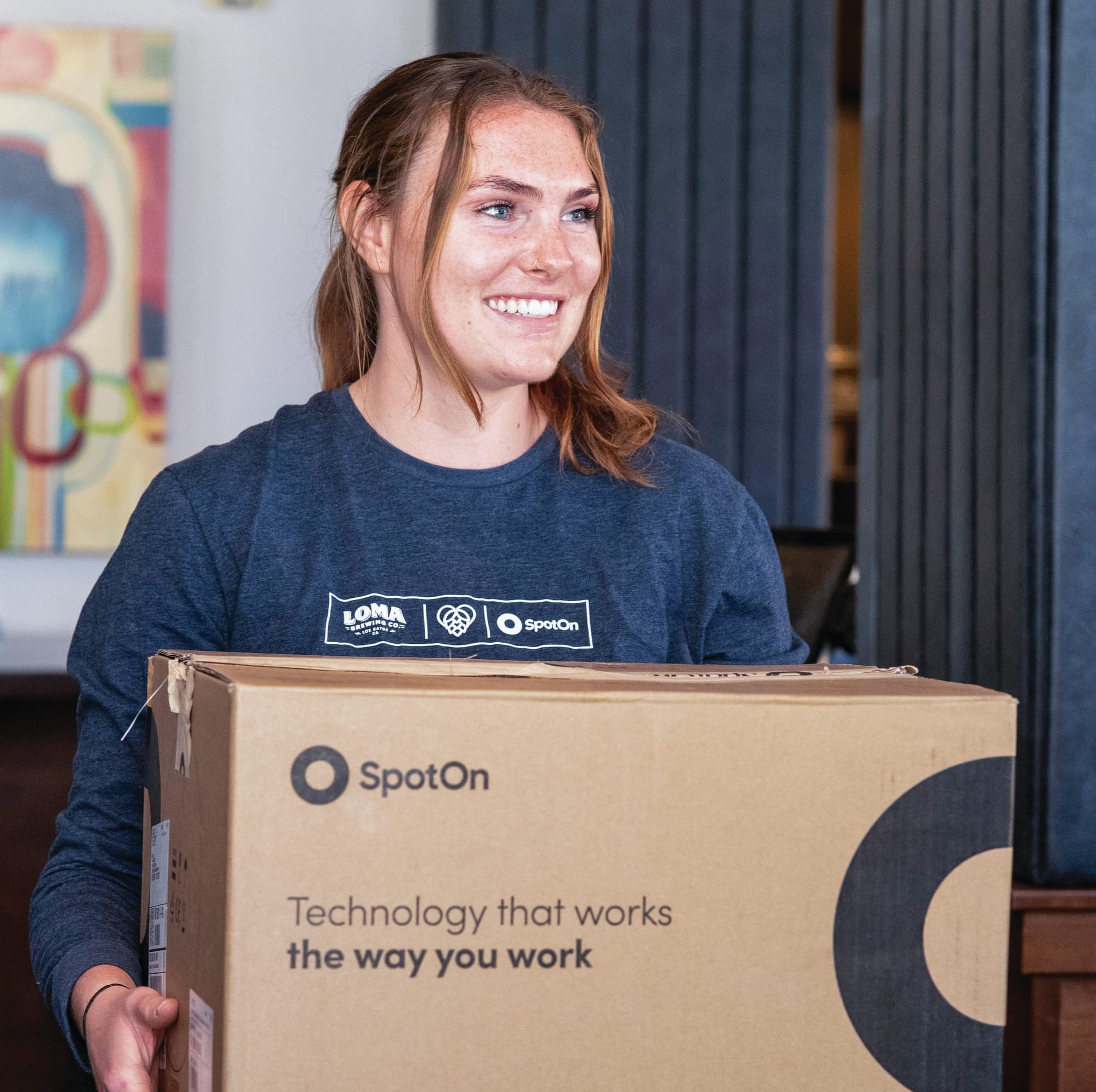
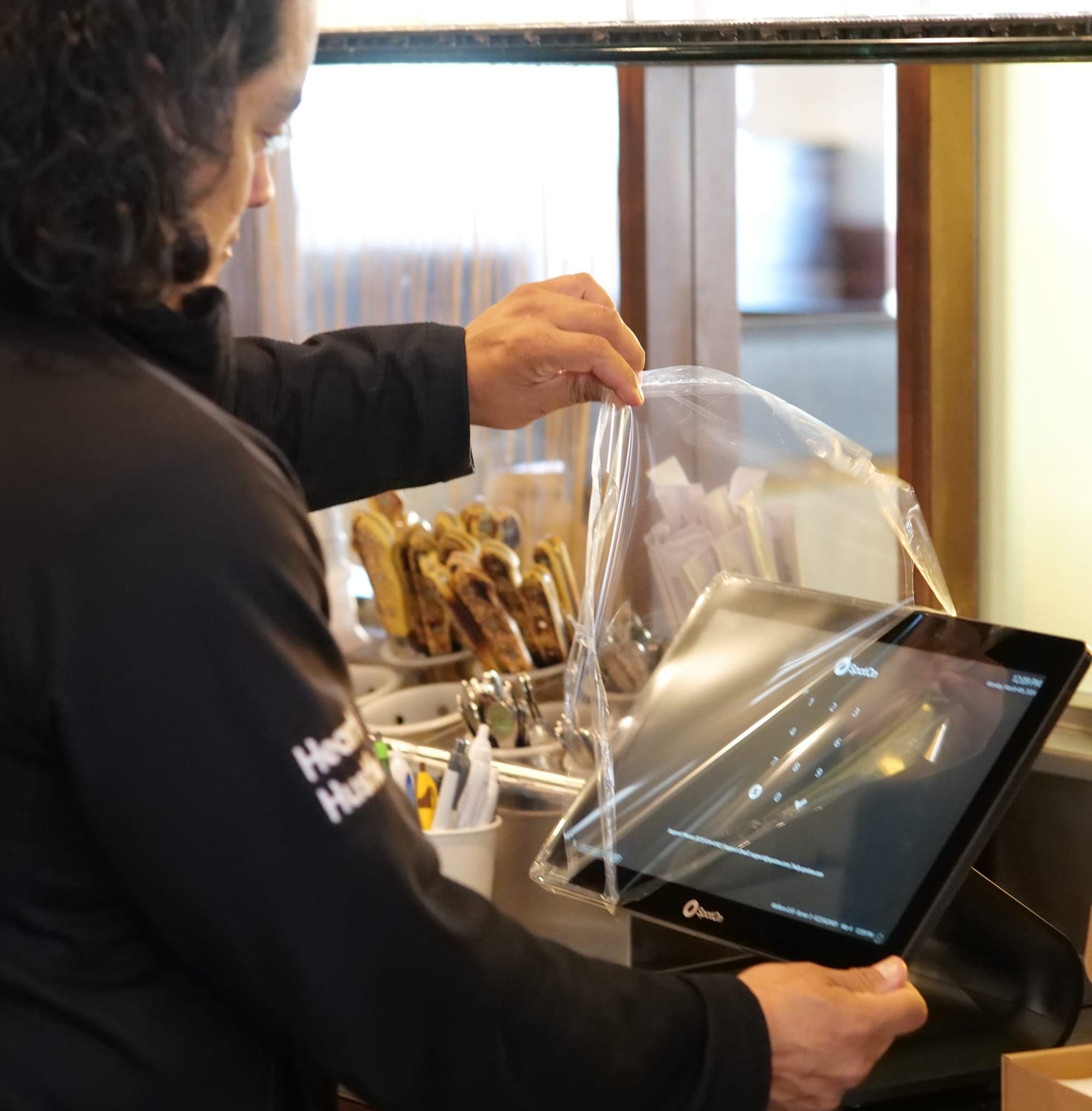
SpotOn provides a dedicated onboarding team for every new client. They handle your menu build, configure your hardware, and help set up your integrations before you go live. When launch day arrives, a SpotOn installer and trainer comes on-site, walking your entire team through the platform and staying on the floor through your first live service to provide real-time support as actual service happens. If you're curious what this process looks like from start to finish, see what switching to SpotOn actually involves.
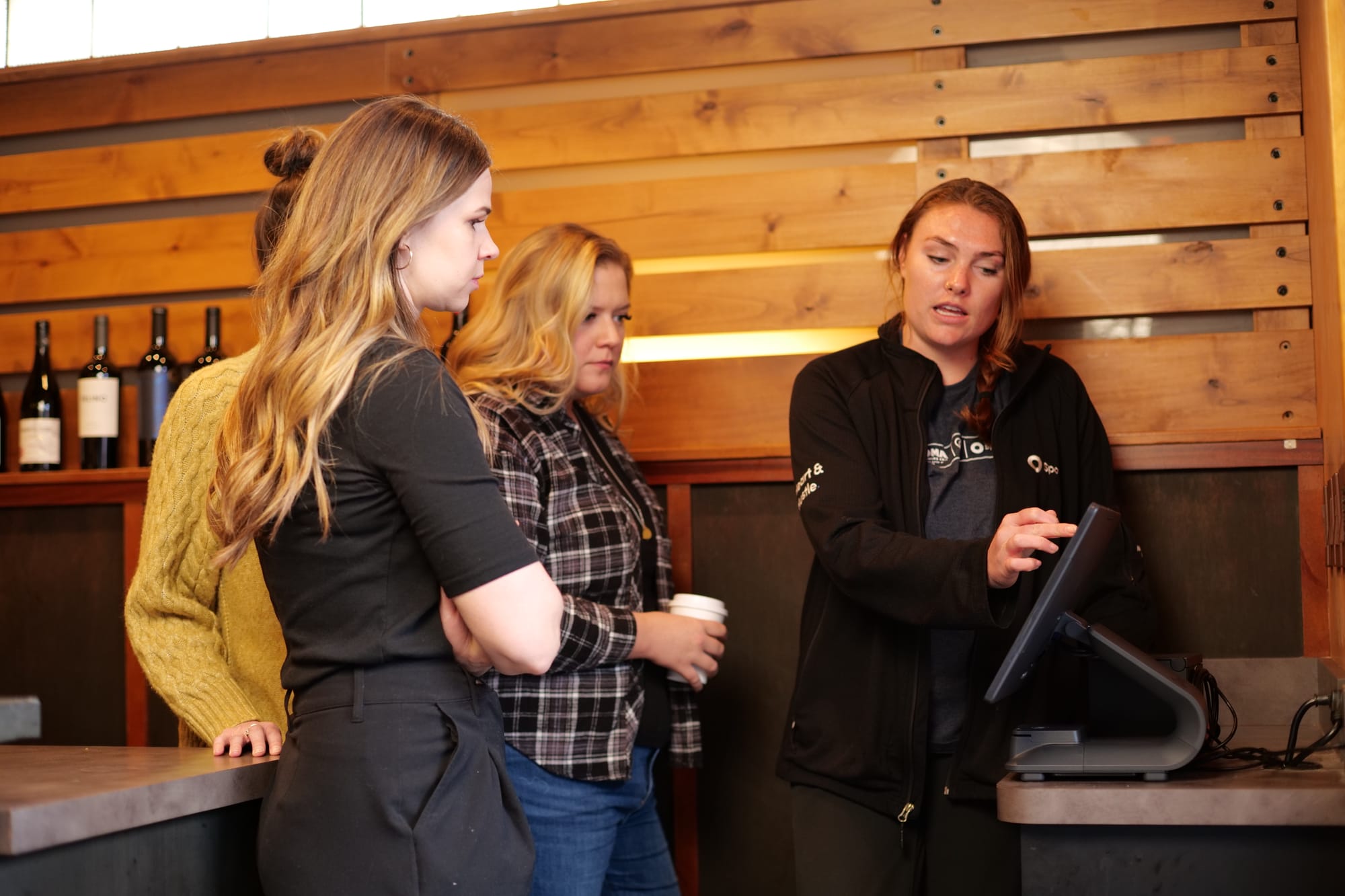
After launch, your managers receive dedicated remote training sessions covering reporting, back-office tools, labor management, and advanced platform features. It also helps to identify a POS champion within your team — a lead server, supervisor, or manager who gets additional training and becomes the internal go-to resource for colleagues in the early weeks.
Step 5: Keep your old system accessible briefly after go-live
Maintain access to your previous system for a few weeks post-launch. Historical sales data, past employee records, and prior guest information may occasionally be useful as you settle in. You don't need it active, just accessible.
Step 6: Optimize in the first 30 to 60 days
Use the first month deliberately: set up your marketing automation, configure your labor budget alerts, run your first Profit Assist P&L analysis, and dig into your menu performance data. The insights you surface in those first weeks compound over the months that follow.
Why independent restaurants choose SpotOn
SpotOn has been named the #1 restaurant POS on G2 for seven consecutive quarters, outranking Toast, NCR Aloha, Square, Clover, SkyTab, TouchBistro, and Lightspeed based on real user reviews and ratings. On Trustpilot, SpotOn holds an "Excellent" rating of 4.5/5 stars across more than 500 verified customer reviews. But don’t just take our word for it. Read SpotOn reviews and see for yourself.
Here's what SpotOn clients actually say:
"We are saving $700 a month alone by switching and moving multiple tech stacks into one spot... The system is much faster than our old system was and has been chugging along without issue since we launched." — Marvin K., G2
"When you call, you speak to a human in minutes — sometimes less than a minute — and 9/10 times, your problem is solved very quickly so you can get back to running your restaurant. SpotOn support is always available, and when they say they will call you back, they actually do." — Connor Perry, Tuscano's Italian Kitchen, Monroe, WA
"How in the hell does a company this big create a culture where everybody wants to help me?" — Amir Harpaz, Owner, The Mudpuppy
What makes SpotOn different isn't any single feature. It's the combination: a fully integrated platform purpose-built for independent restaurants, backed by 24/7 live human support from people who understand hospitality, and delivered with genuine partnership. Commission-free online ordering. AI-powered profitability analysis. An AI Menu Assistant that puts real-time menu control in your manager's hands. Mobile Pay & Review that turns every checkout into a potential five-star Google review. Transparent pricing. A curated integration ecosystem. And a team that's invested in your success long after the ink dries.
See how SpotOn compares to the platform you're on now:
- SpotOn vs. Toast →
- SpotOn vs. NCR Aloha →
- SpotOn vs. Square →
- SpotOn vs. Clover →
- SpotOn vs. TouchBistro →
- SpotOn vs. SkyTab →
- SpotOn vs. Lightspeed →
Switching your point-of-sale platform is one of the most consequential technology decisions you'll make as a restaurant operator. That's exactly why so many operators put it off longer than they should.
But staying on the wrong platform has a cost. It just doesn't send you an invoice. It shows up in the workarounds your team has stopped noticing, the margin you've stopped questioning, and the staff frustration you've started treating as normal. It adds up quietly — until you switch, look back, and wonder why you waited.
When you're ready to see what's on the other side, SpotOn is ready to show you.
G2 rankings based on real user reviews. SpotOn named #1 restaurant POS system, Winter 2026 G2 Grid Report. NRA statistics sourced from the National Restaurant Association Tech Landscape Report, 2024.
Common questions about switching POS platforms
Does SpotOn's POS work offline?
Yes. SpotOn's point-of-sale keeps taking orders and processing payments even when your internet drops, so a Wi-Fi outage during a dinner rush doesn't mean a shutdown. Transactions sync automatically once you're back online.
Does SpotOn integrate with payroll?
Yes. SpotOn's POS platform connects labor data (hours, tips, sales) directly to payroll through SpotOn Teamwork, so business owners aren't manually reconciling timesheets against a separate system. It's one of the integrations that comes up most when clients are comparing platforms during a switch.
Can I take reservations through SpotOn?
Yes. SpotOn Reserve handles reservations and waitlist management, and it's built to work with the same POS platform rather than as a bolted-on third-party tool, so guest data flows into one place instead of living in two systems.