

Customers are bombarded with marketing all day long. Email, social media, TV ads, billboards, push notifications, you get the idea. Each of these channels has a way of piling up, getting buried, or being completely ignored, then deleted. The competition is tough.
That’s exactly why SMS marketing for restaurants is such a powerful marketing tool. Unlike other channels, text messages cut through the daily marketing noise and reach customers instantly, right on their mobile device, where they’re far more likely to see it.
No algorithm to fight. No crowded inbox to get lost in. When you send text messages, they get noticed.
For restaurant operators, that kind of direct communication is a game-changer, making it easy to send timely, relevant messages that promote limited-time specials, highlight popular menu items, and remind customers to order online right when they’re deciding what to eat.
Done right, it helps boost customer engagement, increase repeat visits, and keep your restaurant top-of-mind.
In this article, we’ll cover:
- Why restaurant text marketing is so effective at driving fast customer action
- The SMS marketing strategies restaurants use to bring customers back more often
- How to send effective marketing text messages without sounding spammy or annoying guests
Let’s start by looking at why SMS works so well, specifically for restaurants.

Why SMS is the perfect marketing tool for restaurants
Unlike social media and email marketing, people receive SMS marketing messages in real time. Social posts get buried in the feed, and people can sometimes go hours without looking at their email inboxes. Their mobile devices, however, are a completely different story.
The average American looks at their phone nearly 200 times a day, or roughly every five minutes while they're awake. So it’s not surprising that SMS marketing campaigns have an average 98% open rate compared to email marketing’s 35% (which is still really good, by the way).
But open rates are only part of what makes SMS so effective for restaurants. It’s really about timing. For example, let’s say you own a fast casual restaurant in a busy area and you’re bringing back a lunch special that performed well before. You can post on social media or send an email, but both rely on customers seeing it before they head out for lunch.
With SMS marketing, you can send a message an hour before the lunch rush and reach customers right as they’re deciding where to eat. That’s what drives faster action. Instead of hoping your promotion gets noticed, you’re putting it in front of customers at exactly the right time.
For restaurants, that means more predictable traffic, stronger promotion performance, and a simple way to turn attention into real orders.
SMS marketing strategies successful restaurants use to drive more orders
The most effective SMS marketing strategies aren’t complicated. It’s all about sending the right message at the right time. Here are five proven ways restaurants use text message marketing to drive more orders and keep customers coming back.
1. Limited-time specials
Limited-time promotions give customers a clear reason to act now instead of later. There are many kinds of limited-time specials, like:
- Seasonal menu items
- Weekly rotating dishes
- Limited quantities of a dish (when it’s gone, it's gone)
- Subscriber-only offers
- Discount-based offers
These kinds of strategies tap into people’s FOMO (fear of missing out) response and are one of the easiest ways to prompt customers to take action.
2. Loyalty and rewards reminders
If you don’t currently have a loyalty program, this is your sign to start using one. Restaurants rely on repeat customers, and loyalty programs are one of the most effective ways to drive those return visits. When you pair it with text message marketing, you can stay connected and give customers timely reasons to come back.
You can send updates like point balances, birthday deals, or reminders about rewards that are about to expire. These kinds of text messages feel helpful, not intrusive, and will help foster loyalty over time.
Also — and this is important — having a digital loyalty program is a great way to get customers to not only enroll in your rewards program but also opt-in to receiving text messages. (More on that shortly!)
3. Slow shift promotions
Every restaurant has slow shifts. The key is finding ways to fill those gaps without having to lean on deep discounts across the board. Because SMS messages are delivered in real-time, you can be very strategic with how you approach filling your dining room when it’s typically dead.
For example, if Tuesdays are consistently slow, you could send a text earlier that day promoting a limited-time special available only during that shift. If afternoons tend to lag, you might offer a free appetizer, bonus loyalty points, or another incentive to encourage customers to stop by.
4. Event announcements
Hosting events is a great way to bring in new and repeat customers, but it only works if people know about them. Use text message marketing to promote event announcements like live music nights, special events, or even cooking classes. Sending timely messages to your subscriber list helps increase attendance and keeps your restaurant top-of-mind for upcoming experiences.
5. Online ordering campaigns
If your restaurant offers online ordering, SMS marketing is one of the fastest ways to drive traffic to it. A text message with a direct link to your ordering page, paired with a limited-time discount or loyalty reminder, removes almost every barrier between your customers and their purchase. It’s one of the most direct paths from marketing message to completed order available to restaurant operators today.
How to send customers text messages without sounding spammy
One of the biggest concerns operators have around SMS text message marketing is coming across as annoying and possibly damaging their customer relationships. Nobody wants to be the brand that makes customers hit the unsubscribe button.
The key is to keep your SMS marketing feeling natural, relevant, and respectful of your customers’ attention. When your messages feel helpful instead of disruptive, you’ll see much stronger results.
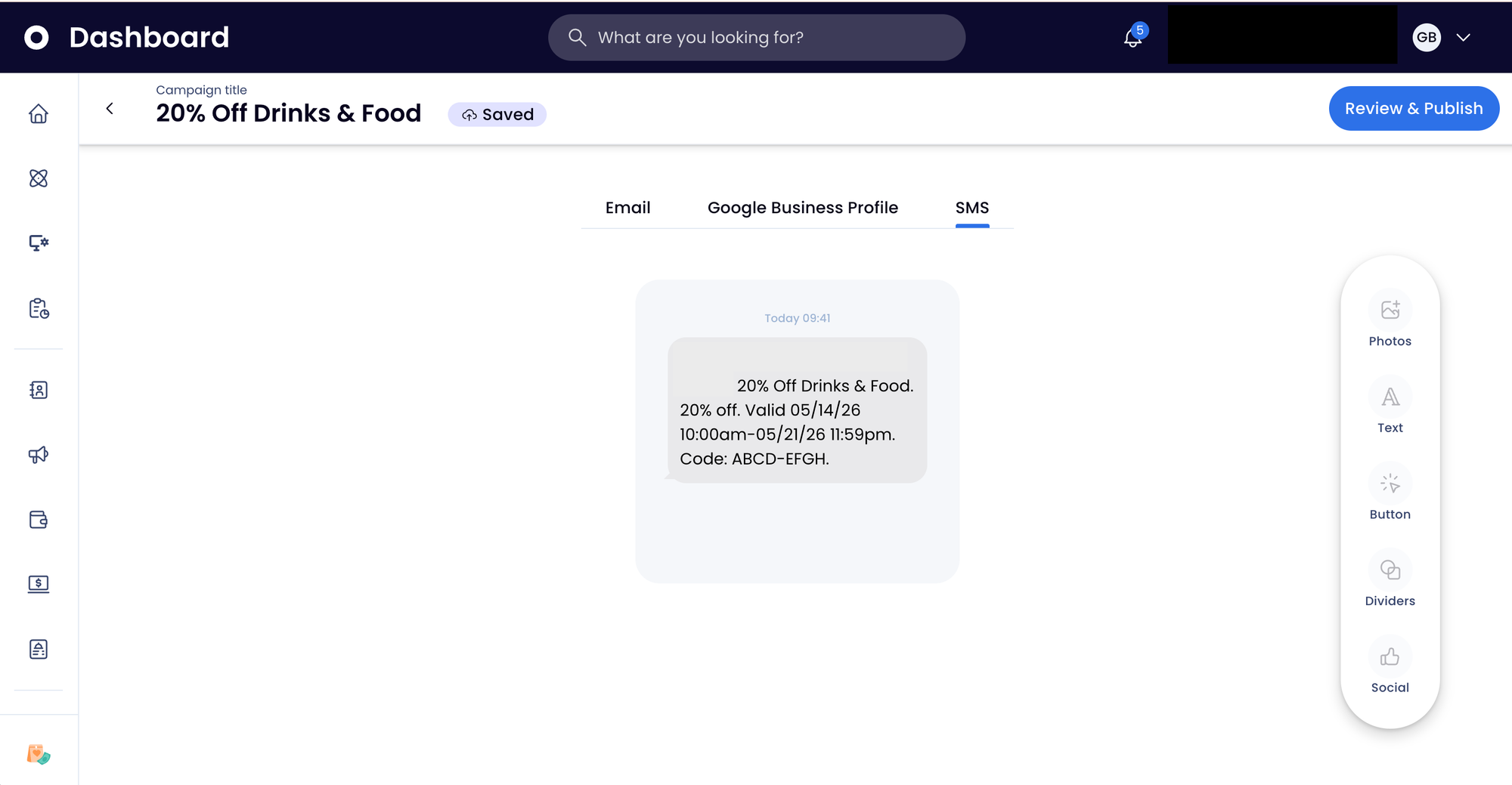
Keep messages short and conversational
Don’t think of text message marketing the same way as regular advertising. It needs to read as if it came from a real person. The best restaurant text messaging feels quick, clear, and easy to scan.
For example, “It’s thirsty Thursday. Stop by after 5 PM for $2 off our signature margaritas.”
You want to aim for friendly, direct, and to the point. Short, clear messages are more likely to grab attention and encourage action.
Create urgency without sounding pushy
It’s a fine line to walk between “act now” and “please stop texting me.” Instead of using aggressive sales language, focus on genuine reasons customers may want to act soon. A special that ends tonight, a popular item that's only available this weekend, or limited seating for an event all create natural urgency.
Instead of constantly pushing discounts, focus on highlighting opportunities customers may not want to miss.
Timing campaigns around customer behavior
Think about when your customers are most likely trying to figure out where to eat, and build your send times around that. Lunch promotions should go out mid-morning. Dinner specials should land in the late afternoon. Weekend event reminders work well on Thursday or Friday.
How often should restaurants send messages
There’s no perfect number, and it can depend on your concept, but consistency and quality matter more than frequency and quantity. But to be safe, you’ll want to keep your SMS messages to around 4 a month or once a week.
If you're running a lot of events or time-sensitive promotions, you might push that a little higher, but pay attention to your unsubscribe rate. If it starts climbing, pull back.
Common restaurant SMS marketing mistakes to avoid
The biggest mistake you can make is treating restaurant text messaging like a loudspeaker instead of a relationship tool.
Common mistakes include:
- Sending too many promotions in a short period
- Delivering the same offer repeatedly
- Ignoring customer preferences
- Sending messages at inconvenient times
- Failing to segment audiences when possible
Not every message needs to go to your entire list. As your SMS program grows, sending more relevant offers to the right audience can improve engagement and help customers feel like the messages are actually useful rather than just another advertisement.
When SMS feels helpful, timely, and relevant, customers stay engaged. When it feels like constant advertising, they opt out. The difference usually comes down to sending the right message at the right time.
How restaurants grow their SMS marketing lists naturally
Before you can start sending marketing texts, customers must give permission to receive them. TCPA regulations require businesses to obtain consent before sending promotional text messages, which means growing your SMS list starts with collecting opt-ins the right way.
Fortunately, restaurants have several natural opportunities to do this during interactions that are already happening every day.
Guests can opt in when joining a loyalty program, placing an online order, signing up through your website, booking a reservation, joining a waitlist, or connecting through a restaurant's Wi-Fi portal. Because customers are already interacting with your business during these moments, the signup process feels seamless rather than intrusive.
Offering a small incentive can also encourage more signups. Exclusive discounts, loyalty rewards, or a free item on a future visit can give customers an extra reason to join your SMS list.
Again, the key is focusing on quality over quantity. A smaller list of customers who genuinely want to hear from your restaurant will almost always outperform a larger list of disengaged subscribers. When guests willingly opt in and consistently receive valuable offers, updates, and rewards, your SMS list becomes a powerful tool for driving repeat business.
Use the right restaurant tech to make SMS marketing easier to manage
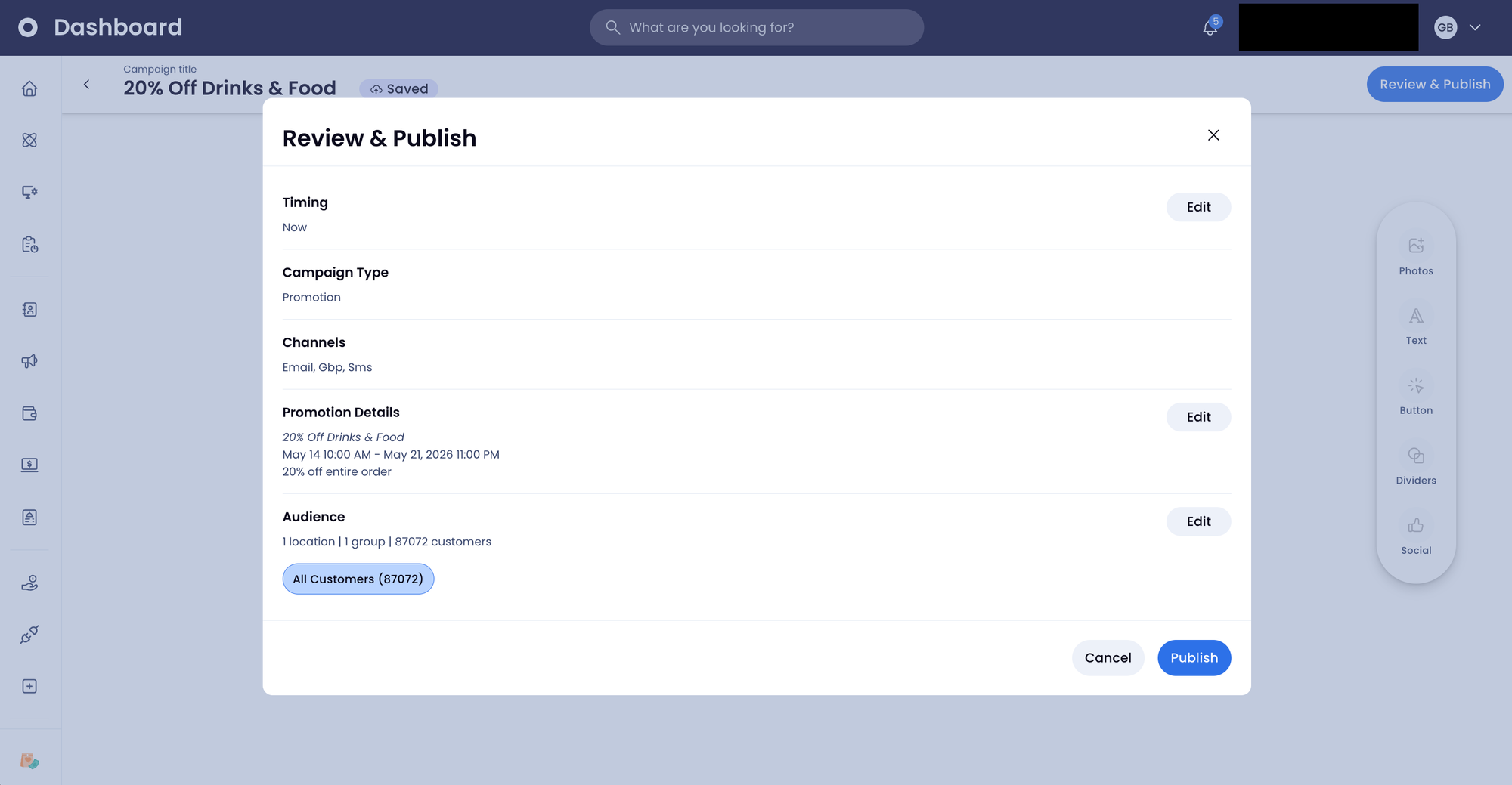
SMS marketing works best when it’s not something you have to think too hard about. The right technology will take most of the manual work off your plate, so you can just focus on running your restaurant instead of managing SMS marketing campaigns. Good SMS platforms let you create a message, select your audience, and send in just a few clicks.
SpotOn's SMS marketing tools are built specifically for restaurant operators. The campaign wizard inside the SpotOn Dashboard makes it easy to build campaigns, target audiences across single or multiple locations, and track delivery and redemptions. SpotOn also handles compliant opt-in and opt-out requirements automatically, keeping you on the right side of TCPA regulations without any extra legwork.
Frequently asked questions about SMS marketing for restaurants
What is SMS marketing for restaurants?
SMS marketing for restaurants is the practice of sending promotional text messages to customers who have opted in to receive communications. Restaurants use SMS to promote specials, share rewards reminders, announce events, encourage online ordering, and drive repeat visits. Because messages are delivered directly to a customer's mobile device, SMS can be an effective way to reach customers quickly and encourage immediate action.
Is text message marketing effective for restaurants?
Yes, text message marketing is one of the most effective channels in the restaurant industry. Because SMS messages are typically opened within minutes, they consistently outperform channels like email marketing in both visibility and response. This makes it easier to reach customers at the right time and increase customer engagement.
How often should restaurants send marketing text messages?
Most restaurants should focus on sending relevant messages rather than sending messages frequently. A few well-timed promotions each month often perform better than constant outreach. The ideal frequency depends on your restaurant, audience, and promotions, but every message should provide value and align with customer preferences to maintain engagement and reduce opt-outs.
How do restaurants collect phone numbers for SMS marketing?
Restaurants collect phone numbers through loyalty program signups, online ordering platforms, reservation systems, waitlists, guest Wi-Fi portals, and website signup forms. Customers must provide consent before receiving marketing texts. Collecting compliant opt-ins helps restaurants grow their subscriber list while meeting TCPA requirements and maintaining customer trust. SpotOn Marketing automatically handles this step for restaurants, making it easy to implement SMS marketing for restaurants.
What types of restaurant promotions work best through SMS?
Some of the most effective SMS promotions include limited-time promotions, loyalty and rewards reminders, event announcements, birthday deals, online ordering offers, and promotions designed to fill slow shifts. Because SMS supports immediate communication, it works especially well for offers that benefit from quick customer action.
Do restaurants need permission before sending marketing texts?
Yes. Restaurants must obtain customer consent before sending marketing text messages. Under TCPA regulations, customers must actively opt in to receive promotional messages. Businesses should clearly explain what customers are signing up for and provide an easy way to opt out. Using a platform that manages compliant opt-ins and opt-outs like SpotOn can help restaurants stay compliant while growing their SMS marketing program.