

There’s a particular kind of chaos that only shows up in restaurants.
It’s not the busy Friday-night kind you plan for. It’s the chaos that sneaks in through labor: a last-minute schedule edit that turns into overtime creep, a clock-in exception that becomes a payroll fire drill, a tip dispute that drags into tomorrow, or an easy fix that turns into a weekly habit.
The tricky part is that labor chaos rarely looks like one big problem. It looks like a dozen small ones. And that’s exactly why it quietly eats margin, drains managers’ time, and puts compliance at risk, all without feeling like you can fully get ahead of it.
That’s why we’re obsessed with labor and operational efficiency at SpotOn. Not as a buzzword, but as a practical way to protect the guest experience and the P&L at the same time. In today’s environment, time is the new margin. If your managers spend hours every week fixing punches, rebuilding schedules, and rerunning payroll, you’re paying for it twice: once in labor dollars and again in lost leadership.
The secret? Tighter labor levers. Levers that reduce rework, prevent surprises, and create repeatable outcomes across locations. Because the goal isn’t more control. It’s more consistency for your team, guests, and the P&L.

Hospitality Without the Chaos: Labor Levers That Protect Margin
Tuesday March 10, 2026 at 1:15 PM – 2:15 PM PT, Emperors Room 1
Speakers: Amy Hom, COO Barcelona Wine Bar; and Rafaela Dulanto, Client Experience, SpotOn
The real cost of “little” labor problems
Most restaurant leaders don’t wake up worried about “punch exceptions.” They wake up wondering:
- Why is labor up when sales are flat?
- Why are my managers spending their day fixing last week instead of running today?
- Why is one location smooth and another is always scrambling?
- Why does compliance feel like guesswork until it’s an audit?
Under the surface, the culprits are all too familiar:
- Last-minute schedule changes that lead to under/over staffing
- Overtime creep caused by early clock-ins, late clock-outs, or poor daypart planning
- Tip close friction, AKA manual spreadsheets, disputes, inconsistent rules
- Payroll rework that looks like exports, corrections, approvals, re-runs
- Compliance risk that grows with every new location that comes with a new set of local rules
These issues are connected. And they add up quickly. In a world where hiring is still hard, they also make retention harder, which is why so many operators are searching for real labor shortage solutions for restaurants that don’t depend on simply finding more people.
Our advice: don’t treat these as separate fires, but rather treat them as a system that needs guardrails and get to installing those rails. This can be done via internal systems or labor management software that works in sync with your restaurant point-of-sale.
Pick the outcome, then pull the lever
When I talk with restaurant operators, the conversation always seems to land on one of three goals: Profitability ($ saved), Efficiency (time saved) or Reduced liability (risk down).
The mistake is trying to fix everything at once. A better approach? Choose your priority, choose your KPI, then implement one or two levers that move it. When you win there, you expand. That’s how operational efficiency in restaurants becomes real, through repeatability.
Here are the levers and prompts you can take back to your team.
Lever #1 Profitability: Stop the labor leaks
Where dollars leak most often:
- Under/over staffing because schedules aren’t built to demand
- OT surprises that show up late in the week
- Early clock-ins and late clock-outs that become the norm
- Manual tip close processes that create disputes and become a time suck
This is also where you can reduce back-of-house labor costs without cutting corners by tightening execution and eliminating preventable rework. Labor efficiency through fewer exceptions and better planning, instead of burning out your team by doing more with less.
KPIs that make this visible fast:
- Labor % by daypart, not just by day
- OT incidents per week
- Exception rate on punches (how often you’re editing time)
- Time-to-close tips and dispute frequency
Questions to ask yourself (or your team):
- When do OT surprises hit? Is there a specific daypart or station?
- How often are you editing punches (early/late, wrong job code)? What’s the approval flow?
- How long does tip close take? And where do disputes originate?
What “good” looks like:
- Schedules anchored to demand signals
- Clear rules for clock-in behavior (and enforcement)
- Standardized tip distribution policies that reduce disputes
- Less time spent “fixing” and more time spent managing
This is where guardrails matter. If your employee scheduling system allows early clock-ins, you’ll get early clock-ins. If tip rules live in someone’s spreadsheet instead of a true tip management solution, you’ll surely have spreadsheet errors. Your goal is to design the workflow so the right action is the default and the wrong action is hard to repeat.
Lever #2 Efficiency: Turn payroll week from manual to automatic
Restaurants don’t need more reporting, they need fewer repeats.
Payroll burns time in predictable places:
- Exports and file wrangling
- Punch edits and job code corrections
- Approvals that bottleneck
- Re-runs after something gets missed
When you fix this, you unlock manager time-savings almost instantly, time that can go back into coaching staff, pre-shifts that resonate, exceptional hospitality and flawless execution.
KPIs to track here:
- Payroll prep time per pay period
- Number of punch edits (and where they come from)
- Time-to-approve payroll
- Number of re-runs
Questions to ask yourself (or your team):
- How many systems/files are in your payroll flow today?
- What’s your biggest source of rework—rates, breaks, job codes, missed punches?
- Who owns approvals, and where does it slow down?
What “good” looks like:
- Exceptions surfaced early with clear ownership
- Role-based approvals (so the right people sign off, quickly)
- Automated exports and auditable workflows
- A single source of truth for labor + payroll inputs
Here’s the important part: payroll efficiency isn’t just saving admin time. It’s a multiplier. When payroll preparation is systemized and managers aren’t buried in corrections, they lead better shifts that show up in guest experience and retention.

Lever #3 Reduced Liability: Scale with guardrails
Compliance isn’t a one-time setup. It should be part of your growth strategy. As soon as you’re operating across multiple locations and regions, your risk multiplies:
- Break and meal rules
- Predictive/fair-workweek policies
- Split shift premiums
- Local wage and scheduling requirements
- Audit documentation gaps
KPIs that keep you honest:
- Compliance rate (by location)
- Number of violations (and which type)
- Premium payouts tied to scheduling and break misses
- Exception documentation completeness
Questions to ask yourself (or your team):
- Where do schedules violate rules today without anyone realizing?
- How do you document exceptions and approvals for audits?
- As you open new units, how do you copy guardrails while addressing local regulations?
What “good” looks like:
- Rules turned on with warnings before schedules get published
- Exception reporting that makes audits survivable
- Templates you can deploy for new units without reinventing the wheel
- Weekly review routines that catch patterns early
This is where standardized restaurant workflows matter most. They reduce reliance on organizational knowledge, improve consistency across locations and make compliance something you run, rather than something that runs you.
The operations layer people forget: throughput controls and kitchen flow
The operations layer people forget: throughput controls and kitchen flow
One of the most overlooked drivers of labor performance is the kitchen’s ability to handle volume predictably. When the line is under water, you don’t just lose tickets, you lose labor control. You get late outs, missed breaks, comped items, and a stressed team that’s harder to retain.
That’s why it’s also important to touch on the operational side of labor performance with things like online order throttling and KDS optimization. When your kitchen display system is structured well and you have smart controls for order pacing, you protect both guest experience and labor outcomes: fewer “all hands” emergencies, fewer mistakes, and more consistent throughput.
The people lever: cross-training that actually pays off
Not every lever is software. Some of the best labor shortage solutions for restaurants are operational—and repeatable. A smart staff cross-training strategy creates flexibility without chaos:
- Fewer panic schedule edits because you have coverage options
- Better daypart staffing because roles are more fluid
- Stronger bench strength as you grow
The key is pairing cross-training with clear workflows and guardrails. Cross-training without standards can create inconsistency. Cross-training with standardized restaurant workflows creates resilience.
Consistency is the point
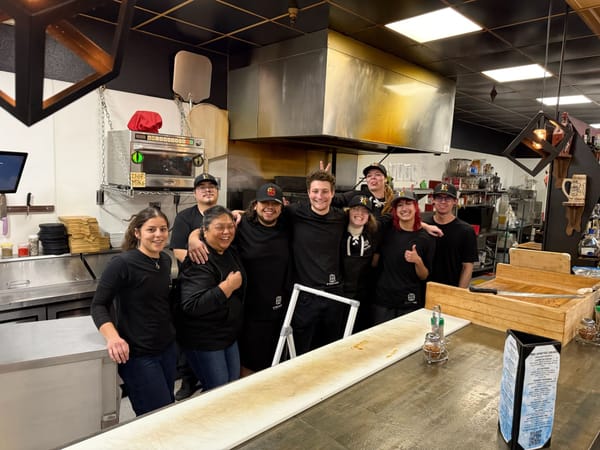
A restaurant leadership team that does all of these things well, and does them consistently, is Barcelona Wine Bar. What I respect most about Barcelona Wine Bar is their commitment to hospitality and discipline. When you’re operating in 20 cities with diverse teams, complex menus, and hundreds of labels, you need repeatable systems that help leaders run great shifts.
Barcelona Wine Bar approached labor guardrails and automation to reduce chaos while protecting what matters: the guest experience.
So think about your restaurant business. If you changed one thing in your labor system this month, what would pay you back fastest?
- A clock-in rule that prevents early OT
- A scheduling process anchored to daypart demand
- A tip workflow that eliminates disputes and closes faster
- A payroll approval flow that removes bottlenecks
- A compliance warning that prevents violations before they happen
The teams that win don’t do everything. They do the next thing right, consistently.
About the author
Rafaela Dulanto is a hospitality operator, educator, and team-builder with over a decade of leadership in world-class restaurants and hotels. At SpotOn, she brings an operator-first perspective to help restaurant leaders simplify operations, strengthen execution, and protect margins, without compromising hospitality.